Blog
CB Radio License: FCC Requirements And Legal Rules Explained
Many people rely on two-way radios for communication on the road, at job sites, or during emergencies. However, the rules surrounding radio frequencies can be confusing. You might wonder if you need to pass a test, pay a fee, or file paperwork just to talk to your team. Specifically, the question of Cb radio licenses often comes up for new users who want to stay on the right side of the law.
Citizens Band (CB) radio has been a staple of American communication for decades. It offers a way for individuals to communicate over short distances without relying on cellular networks. While it is accessible, it is not a lawless frontier. The Federal Communications Commission (FCC) has specific regulations that every operator must follow. Ignoring these can lead to penalties, equipment confiscation, or harmful interference with other important signals.
In this guide, we will break down everything you need to know about CB licensing, from power limits to equipment certification. We will also compare CB to other radio services to help you decide which communication tool is right for your needs.

Key Takeaways
No Paper License Needed: CB radio operates under “License by Rule,” meaning you do not need an individual license document.
Strict Equipment Rules: You must use FCC-certified equipment and cannot modify radios to increase power.
Business vs. Personal: While CB is free, it lacks the privacy and range required for professional security or business operations.
Power Limits: CB radios are limited to 4 watts for AM and 12 watts for SSB transmission.
Alternative Options: For clearer, private communication, licensed Motorola two-way radios are often the superior choice.
Compliance is Mandatory: Even without a paper license, you must follow Part 95 rules.
Safety First: Churches and security teams should opt for UHF/VHF business radios for reliability and privacy.
Check Your Gear: Ensure any radio you buy has an FCC ID sticker on the back.
Indoor vs. Outdoor: CB is poor indoors. UHF radios (Business Band) are superior for penetrating walls.
Table of Contents
CB Radio Licenses
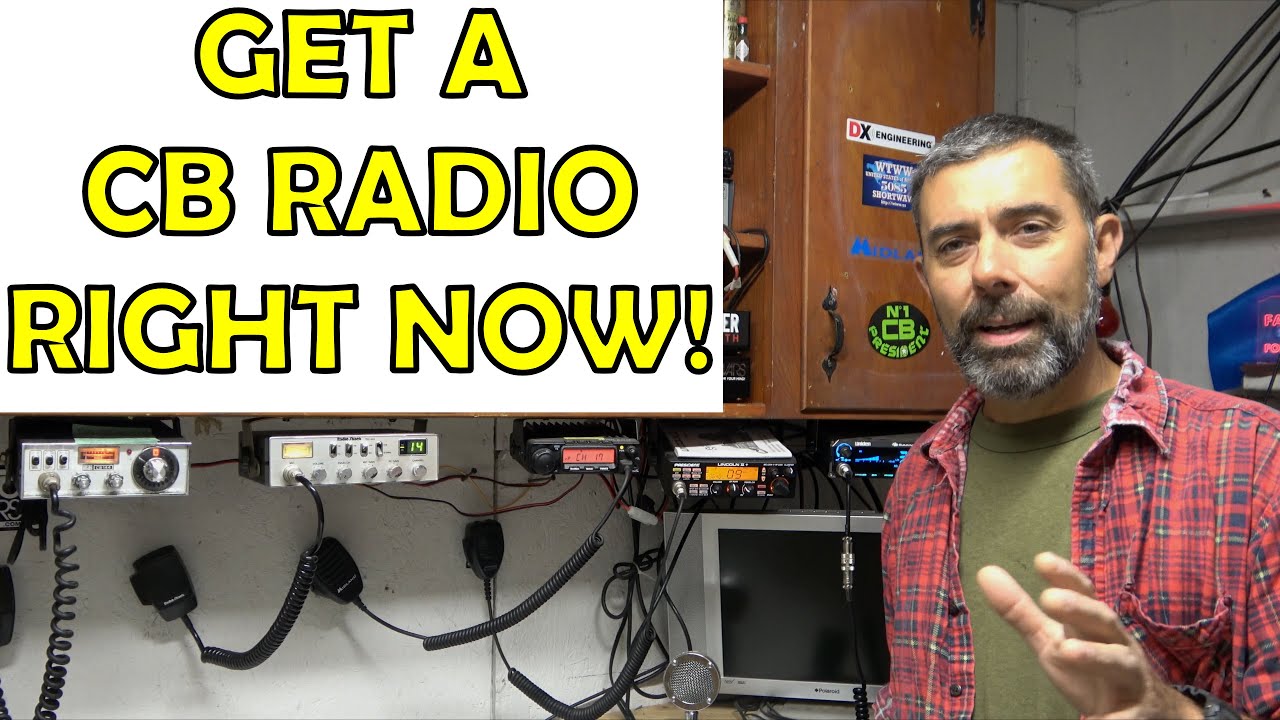
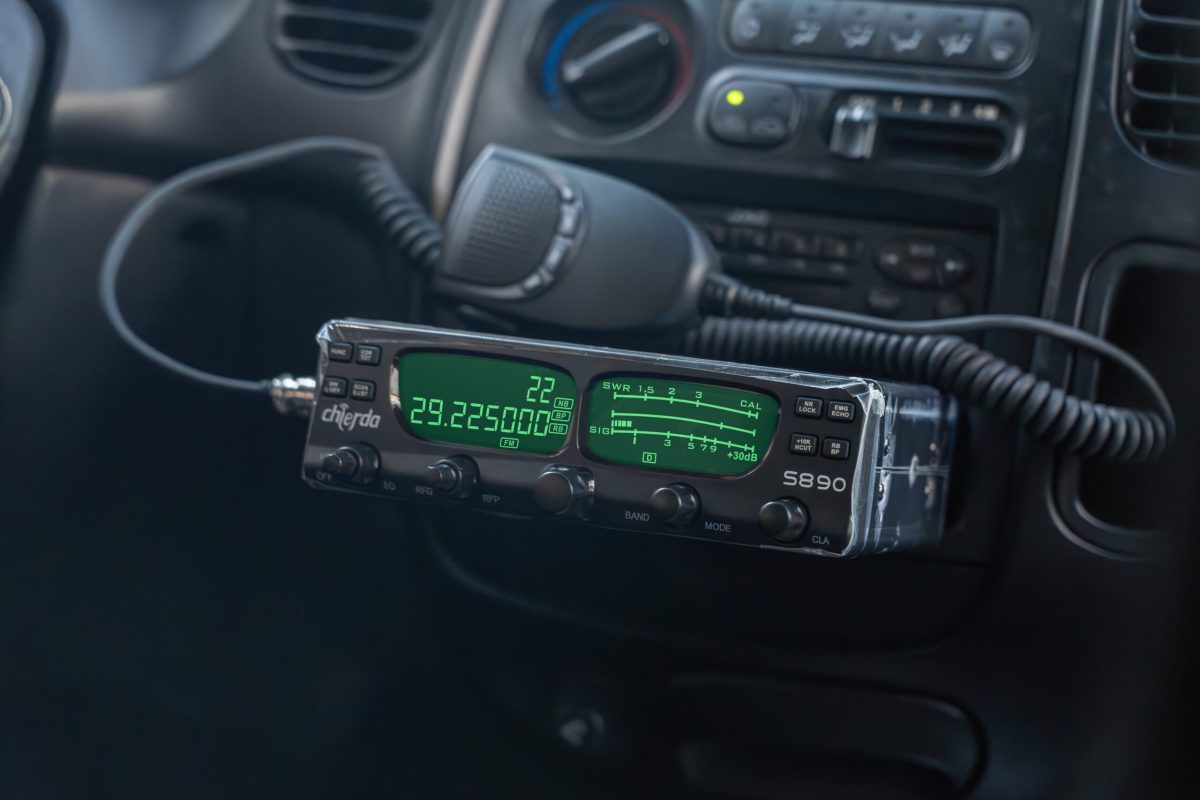
Citizens Band (CB) radio is a personal radio service used for private two-way radio communication.4 Unlike commercial radio bands used by police or large corporations, CB is designated for individual use. It operates on 40 shared channels near the 27 MHz band. The most distinct feature of this service is its accessibility. You do not need to take an exam or pay a recurring fee to the government to use it.
The FCC regulates CB radio under a principle called “license by rule.” This means that you are authorized to operate a CB radio simply by following the established rules. There is no physical license to print, frame, or carry in your wallet. As long as you are not a representative of a foreign government and you adhere to the technical restrictions, you are considered licensed.
However, this ease of access comes with limitations. Because the frequencies are shared and open to the public, there is no privacy. Anyone with a CB radio can hear your conversation. This makes it excellent for public alerts on the highway but less ideal for a security team discussing sensitive incidents.
CB Radio License Requirements And Rules
Even though you do not need a paper license, the FCC has established a strict framework for CB radio operations. These rules are found in Part 95 of the FCC rules. The primary goal of these regulations is to allow fair access to the airwaves for everyone and prevent interference with other electronics.
One of the most essential rules involves the duration of your transmissions. You should limit your communication to the minimum necessary time. The FCC technically limits communications to five minutes at a time, followed by a one-minute silent period.5 While this is rarely strictly enforced for casual chat, it highlights the shared nature of the service.
You also have responsibilities regarding conduct. You cannot use a CB radio to commit a crime, broadcast music, or advertise goods for sale. The frequencies are strictly for two-way voice communication. Furthermore, you must prioritize emergency communications. If you hear someone in distress on Channel 9, you must yield the frequency immediately.
Essential Rules for CB Operators
No Music or Whistling: You cannot broadcast sound effects, music, or whistling to annoy others.
No Profanity: The use of obscene, indecent, or profane language is prohibited.
Emergency Priority: You must give way to any emergency communication.
No Connection to Phone Lines: You cannot manually connect your CB radio to a telephone line to make phone calls.
How Much Does A CB License Cost?
The answer is zero dollars. Because CB radio operates under the “license by rule” statute, there is no application fee, no regulatory fee, and no renewal cost. This makes it one of the most affordable points of entry for two-way radio communication.
However, “free licensing” does not mean the hobby is without cost. You must purchase FCC-approved equipment. A compliant CB radio can cost anywhere from $50 for a basic handheld unit to over $200 for a feature-rich mobile base station. Additionally, you will likely need to invest in a quality antenna and coaxial cable, which are critical for performance.
When you compare this to other services, the value becomes clear. For example, a GMRS license costs $35 for ten years.6 Commercial business licenses (Part 90) can cost hundreds of dollars in coordination and application fees. Below is a comparison of costs associated with different radio services.
Table 1: Radio Service Cost Comparison
| Radio Service | License Fee | Exam Fee | Equipment Cost Range | Typical User |
| CB Radio | $0 | None | $50 – $250 | Truckers, Hobbyists |
| FRS (Family Radio) | $0 | None | $20 – $100 | Families, Camping |
| GMRS | $35 (10 Years) | None | $50 – $300 | Off-roaders, Groups |
| Amateur (Ham) | $35 (10 Years) | $15 (approx) | $30 – $1000+ | Tech Enthusiasts |
| Business (Part 90) | $300 – $600+ | None | $200 – $800+ | Security, Hotels, Schools |
How Many Watts Can You Transmit Without A License?
The answer is strictly limited to 4 watts for standard AM transmission.
For Single Side Band (SSB) transmissions, which is a more efficient way of sending voice signals, the limit is 12 watts Peak Envelope Power (PEP).7 These limits are non-negotiable under FCC rules. The reason for this limitation is to keep the signal relatively local and prevent it from “bleeding over” into other electronic devices, such as neighbors’ televisions or baby monitors.
Many unlicensed or illegal operators try to bypass this by using linear amplifiers, often called “kickers.” These devices boost the signal power significantly, sometimes to hundreds of watts. Using a linear amplifier on the Citizens Band is illegal. If caught, you face severe fines.
Licensed radio services often allow for higher power. For instance, a licensed Business Band radio can often transmit at 4 to 5 watts on handhelds and up to 50 watts on mobile units or repeaters. This higher power helps punch through concrete buildings and covers larger campuses, which is why facilities managers prefer licensed Motorola solutions over standard CB radios.
Shop FCC-approved license-free radios or upgrade to licensed systems on our website—hassle-free, pre-certified, and ready to use legally.
If your organization needs private, secure communication without public interference, contact our expert team. We can help you select Motorola systems that ensure FCC certification and compliance effortlessly.
How Far Can You Broadcast Without A License?
The answer depends heavily on your terrain and antenna, but typically ranges from 1 to 5 miles.
CB radio operates on the 27 MHz band, which has a long wavelength.8 This frequency can follow the curvature of the earth slightly, but it is generally a line-of-sight communication method. Under standard conditions:
Mobile to Mobile: Expect 1 to 5 miles of range.
Base Station to Mobile: Expect 5 to 10 miles of range.
Base Station to Base Station: Expect 10 to 20 miles of range.
Factors such as hills, trees, and buildings will reduce this range significantly. Antenna height is the most critical factor. The higher your antenna, the further you can transmit.
Sometimes, atmospheric conditions allow CB signals to bounce off the ionosphere and travel hundreds of miles. This is called “shooting skip.” While it is a fascinating phenomenon, you cannot rely on it for consistent communication. For security teams or event coordinators who need guaranteed coverage across a specific site, the unpredictable range of CB is a major drawback.
What Does License By Rule Mean?
“License by rule” is a legal concept used by the FCC to simplify access to certain radio services.9 It means that the FCC has granted a blanket authorization to anyone who meets the eligibility requirements to operate in that band.
Instead of filling out an FCC Form 605, paying a fee, and waiting for a call sign to be mailed to you, you are automatically licensed the moment you turn on a certified radio. This reduces the administrative burden on both the user and the government.
However, this does not mean the rules do not apply. It means that your compliance with the rules is your license. If you stop following the rules—for example, by attaching an illegal amplifier—you effectively revoke your own authorization. You become an unlicensed operator, subject to federal penalties.
Examples of Compliance vs. Non-Compliance:
Compliant: Using a store-bought, unmodified Cobra or Uniden CB radio to talk to a friend 2 miles away.
Non-Compliant: Modifying the internal circuits of a radio to transmit on unauthorized frequencies (often called “freebanding”).
What If You Operate Without An FCC License?
Operating a radio transmitter without a license when one is required, or operating a “license by rule” device outside of its legal parameters, is a serious federal offense. The FCC Enforcement Bureau is responsible for investigating these violations.
For CB users, the most common violation is using non-certified equipment or high-powered amplifiers. If the FCC tracks an illegal signal to your location, the consequences can be severe.
Potential Consequences Include:
Monetary Fines: Fines can range from thousands to tens of thousands of dollars per violation.
Equipment Seizure: The government can confiscate your radio equipment.
Criminal Sanctions: In extreme cases involving interference with safety signals, criminal charges can apply.
It is important to note that CB radios are exempt from individual licensing only if they remain within the technical standards of Part 95. Once you modify a radio to exceed power limits, it is no longer a CB radio in the eyes of the law; it is an illegal transmitter.
Disclaimer: This information is general and not legal advice. Always confirm details with the FCC or a qualified radio licensing specialist.
Ham Radio Vs CB: What Are The Key Differences?
Ham radio (Amateur Radio) and CB radio are often confused, but they serve very different purposes.
Ham radio requires a license. You must pass a technical exam to prove you understand radio theory and regulations. In exchange, ham radio operators get access to vast frequency bands, high power limits (up to 1,500 watts), and the ability to build their own equipment. It is a hobby focused on the art and science of radio.
CB radio is for the general public. It requires no test and no technical knowledge. It is intended for short-distance personal or business communication.
Table 2: Ham Radio vs. CB Radio
| Feature | Ham Radio | CB Radio |
| Licensing | Required (Test + Fee) | None (License by Rule) |
| Max Power | Up to 1500 Watts | 4 Watts (AM) |
| Range | Global (with right gear) | Local (1-5 miles) |
| Equipment | Can build/modify own | Must use certified stock |
| Usage | Hobby, Emergency, Experimentation | Casual chat, Traffic info |
| Privacy | None (Encryption illegal) | None (Encryption illegal) |
For a church security team or a warehouse manager, neither Ham nor CB is usually the best choice. Ham radio is too technical for general staff, and CB is too open and noisy. This is where Business Band radios (like Motorola commercial lines) fill the gap.
Which Two-Way Radios Require A License?
Certain two-way radios require an FCC license because they operate on frequencies that are coordinated to prevent interference. If you are running a business, school, or security operation, you likely need one of these radios.
GMRS (General Mobile Radio Service): This requires a simple license fee ($35) but no test. It allows for higher power than FRS and the use of repeaters to extend range.
Business Band (Part 90): These radios, often used by police, fire, and private industries, require a frequency coordination process and a license. This ensures that your business has a clear channel that does not overlap with the competitor next door.
If you pick up a radio that has a removable antenna and transmits over 2 watts, there is a high probability it requires a license. Most professional Motorola radios used in hospitality or construction fall into this category.
What Radios Do Not Require A License?
For users who need simple, short-range communication without paperwork, the FCC has designated specific “license-free” services.
CB (Citizens Band): As discussed, good for vehicle-to-vehicle.
FRS (Family Radio Service): These are the common “blister pack” walkie-talkies you see at sporting goods stores. They are limited to low power (up to 2 watts on some channels) and have fixed antennas. They are great for family camping trips but usually fail to penetrate concrete walls in large buildings.
MURS (Multi-Use Radio Service): This is a lesser-known VHF service that allows up to 2 watts.It is excellent for outdoor use and does not require a license.
Table 3: License-Free Radio Options
| Service | Frequency Band | Best Use Case | Limitations |
| CB | 27 MHz (HF) | Highway, Trucks | Large antennas needed, noisy |
| FRS | 462/467 MHz (UHF) | Kids, Camping | Short range, fixed antenna |
| MURS | 151/154 MHz (VHF) | Outdoors, Hunting | Only 5 channels available |
| 900 MHz | 900 MHz (ISM) | Retail, Schools | Short range, specific gear |
How To Get An FCC License For Two-Way Radio
If you decide that CB or FRS is not robust enough for your needs, getting a license for a business radio is a straightforward process, though it does involve paperwork.
Obtain an FRN: You must register for an FCC Registration Number (FRN) on the FCC’s CORES system. This is your unique ID with the government.
Frequency Coordination: For Business Band licenses, you must work with a frequency coordinator. They search the database to find frequencies available in your area to ensure you do not interfere with existing users.
File Form 601: Once a frequency is found, you file Form 601 with the FCC.
Pay Fees: You will pay the coordination fee and the FCC regulatory fee.
For GMRS, the process is even easier: just log into the FCC Universal Licensing System (ULS), apply for a GMRS license, and pay the $35 fee. No coordinator is needed.
Many buyers find the Business Band process complex. That is why professional dealers often handle the licensing paperwork for their clients as part of the sales package.
CB Radio Frequencies And What You Should Know?
CB radio consists of 40 standardized channels.12 You cannot tune “in between” these channels.
Under FCC regulations, channel sharing is mandatory. No one “owns” a channel. If you are talking on Channel 20 and someone else wants to use it, you must cooperate or find another channel.
However, custom has designated certain channels for specific uses.
Table 4: Common CB Channels
| Channel | Frequency | Common Usage |
| 09 | 27.065 MHz | Emergency / Distress Only |
| 19 | 27.185 MHz | Highway / Trucker Channel |
| 17 | 27.165 MHz | North/South Traffic (Unofficial) |
| 21 | 27.215 MHz | Regional Traffic (Unofficial) |
| 06 | 27.025 MHz | “Super Bowl” (High power illegal skip shooters) |
For professional users, the chaos of Channel 19 is unsuitable. You need a system where your team has exclusive or semi-exclusive access to the airwaves.
What Is CBRS And How Does It Differ From CB Radio?
The acronyms are similar, but the technologies are worlds apart.
CB (Citizens Band) is the 27 MHz analog radio service we have discussed throughout this article. It is old technology, prone to static, and used for voice.
CBRS (Citizens Broadband Radio Service) is a modern data service operating in the 3.5 GHz band. It is sometimes called the “Innovation Band.” It is used for private LTE networks, 5G expansion, and high-speed data transmission in buildings.
CBRS requires a completely different licensing structure involving a Spectrum Access System (SAS) that dynamically manages frequencies to prevent interference with US Navy radar.14 You cannot talk to a CBRS system with a CB radio. If you are looking for building-wide Wi-Fi alternatives or private cellular networks, you are looking for CBRS, not CB.
AI Overview And The Future Of CB Licensing
Artificial Intelligence is beginning to impact the world of radio frequency management. While CB radio is an analog technology, AI is changing how we monitor and regulate the spectrum.
In the future, we may see “Cognitive Radios” that use AI to automatically detect open frequencies and adjust power levels to avoid interference. This could eventually lead to more dynamic “license by rule” frameworks where the radio does the compliance work for you.
Currently, the FCC is exploring how AI can help monitor the airwaves for illegal enforcement. Automated listening stations could theoretically detect illegal high-powered amplifiers or unauthorized transmissions faster than human agents. For the consumer, AI integration in radios currently means better noise cancellation, filtering out the static that plagues traditional CB communication.
What This Means For You
Understanding the difference between CB, GMRS, and Business Radio is critical for legal and effective communication.
If you are a hobbyist or a driver wanting updates on traffic, a standard CB radio is a great, license-free tool. However, if you are a facility manager, a church security director, or a school administrator, CB radio will likely frustrate you. The lack of privacy, the interference from high-powered illegal stations, and the limited range make it a poor choice for safety and operations.
Equipment Must Be Certified And What That Means?
FCC certification ensures that a radio transmitter will not cause harmful interference. Every legal radio sold in the US must undergo testing in a lab.
When buying a radio, look for the FCC ID on the back label. You can look up this ID in the [suspicious link removed] to see exactly what the radio is approved for.
A common mistake is buying cheap radios from online marketplaces that are not certified for use in the US. These radios often transmit on forbidden frequencies (like those used by emergency responders), putting you at significant legal risk. Always buy from a reputable US-based dealer to ensure your equipment is safe and legal.
Frequently Asked Questions About CB Radio Licenses
What Should I Know About CB Radio Licenses And FCC Compliance?
You should know that while you do not need to apply for a license, you are strictly regulated on power and equipment. You cannot use “linear amplifiers” to boost your signal, and you cannot speak on emergency Channel 9 unless there is a genuine emergency. Compliance is self-policed, but violations are subject to federal enforcement.
Are There Specific CB Radio License Requirements For Beginners?
No, there are no age restrictions or citizenship requirements for operating a CB radio within the United States (provided you are not a representative of a foreign government). Beginners simply need to purchase an FCC-certified radio, connect an antenna, and start talking. The only “requirement” is to learn the etiquette—listen before you talk, and be polite on the airwaves.