
Blog
Two Way Radio Communication Guide To Range And LMR Types
Effective communication is the backbone of any successful operation. Whether you manage a sprawling school campus, a security team at a large church, or a construction site, you need instant connectivity. Cell phones often fail during emergencies or in areas with poor signal. This is where professional two way radio communication fills the gap.
However, navigating the world of radio frequencies, FCC licenses, and hardware types can feel overwhelming. You might be wondering why some radios work through concrete walls while others fail. You may also need to know if your organization legally requires a license.
This guide breaks down exactly how these systems work. We will cover the types of equipment available, how to maximize your range, and how to select the right system for your specific environment.


Key Takeaways
Assess Your Environment: Use UHF for indoor buildings (schools, churches, warehouses) and VHF for outdoor open spaces (farms, parks).
Licensing Matters: Most professional business radios (LMR) require an FCC license. This protects you from interference.
Avoid Consumer Gear: FRS “bubble pack” radios are not designed for daily business use. They lack durability and privacy.
Consider Repeaters: If you have dead zones or need city-wide coverage, a repeater is necessary to extend range.
Go Digital: Modern digital radios offer better voice clarity and 40% longer battery life than older analog models.
Table of Contents
Two Way Radio Communication?
Two way radio communication refers to the transmission of audio signals between two or more devices using radio waves. Unlike a standard telephone where both parties can talk at once (full-duplex), most radios use half-duplex technology. This means only one person can transmit at a time.
When you press the “Push-to-Talk” (PTT) button, you claim the channel. Everyone else on that frequency listens. This structure is vital for rapid information sharing. It allows a security director to speak to an entire team simultaneously, rather than calling individuals one by one.
This technology fits seamlessly into various sectors. Public safety relies on it for life-saving coordination. Businesses use it for logistics. Event coordinators use it to manage crowds. Even recreational users utilize it for hiking or off-roading.
What Is A Two Way Radio?
A two-way radio is a radio transceiver (a transmitter and receiver in one unit). It can both send and receive voice data over Radio Frequency (RF) energy. These devices come in three primary configurations:
Portables: Handheld devices, often called walkie-talkies, powered by batteries.
Mobiles: larger units mounted in vehicles, powered by the car’s battery.
Base Stations: Desktop units plugged into wall outlets, used by dispatchers.
The primary function is to exchange voice without relying on cell towers. When you speak into the microphone, the device converts your voice into radio waves. These waves travel through the air to another radio tuned to the same frequency, which converts them back into sound.
This differs significantly from one-way broadcast devices, like a car radio, which can only receive signals. Talkback capability is what defines a two-way system. It empowers teams to acknowledge instructions instantly.
For example, in a manufacturing plant, a floor manager can alert maintenance to a machine failure immediately. In outdoor activities, it ensures hikers stay in contact even when miles away from the nearest cell tower.
Two Way Radio Licenses
One of the most common questions we receive is regarding legality. The Federal Communications Commission (FCC) regulates the airwaves in the United States. Because radio spectrum is a limited resource, the FCC requires licenses for many types of operation.
Licensing ensures that businesses and public safety agencies do not interfere with one another. Imagine if a school bus driver’s radio interfered with a nearby police dispatch. That would be dangerous. Licensing assigns specific frequencies to specific users to prevent this chaos.
Selling Point: Navigating government forms is tedious. Speak with our licensing specialists for fast approvals and compliant setup. We handle the paperwork so you can focus on your operations.
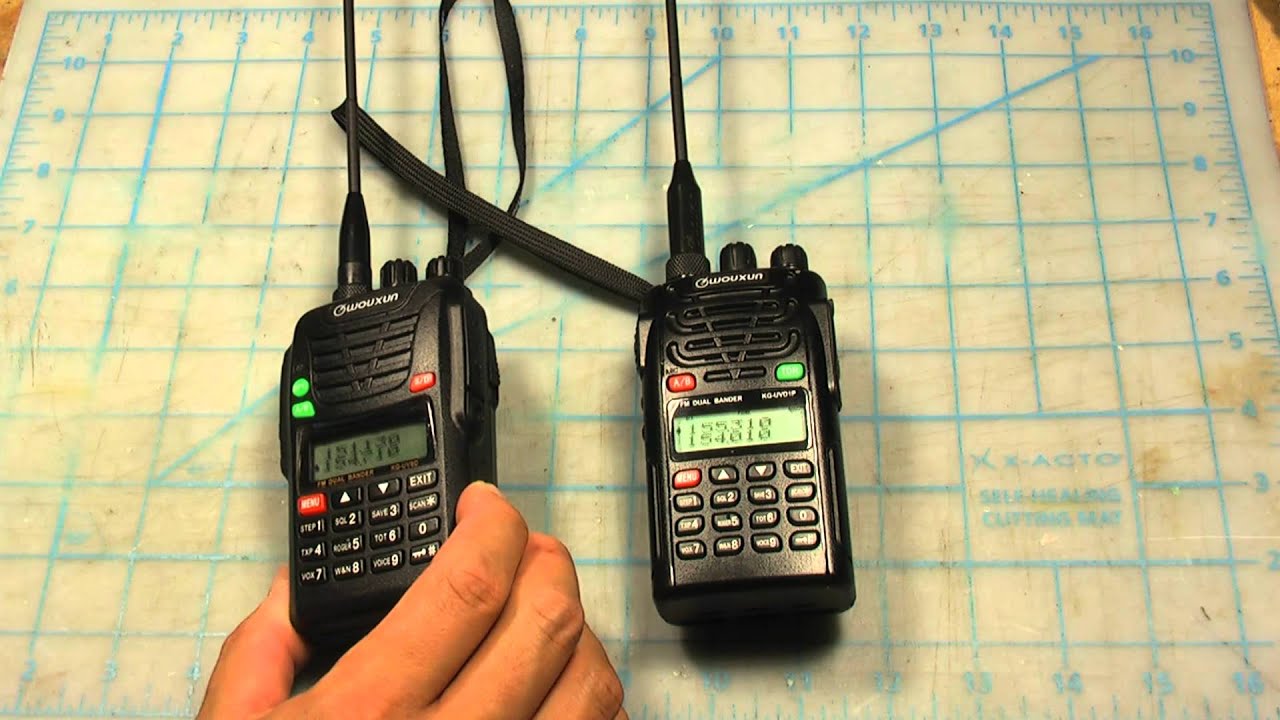
Instant, team-wide communication without delays or dependencies.
Two-way radios allow leaders to broadcast instructions to entire teams in real time, without dialing numbers, waiting for connections, or relying on cellular coverage. This makes them ideal for fast-moving environments where clarity, speed, and reliability directly impact safety and productivity.
What Is A Two-Way Radio License?
A radio license is essentially a permission slip from the government to use a specific slice of the radio spectrum. It is not just about the device; it is about how you use it.
When a user or organization obtains a license, usually under FCC Part 90 for businesses, they are granted authorization for specific parameters. This includes the exact frequencies you can use, the maximum power output (wattage) allowed, and the geographic area of operation.
The license covers the entire system. This means a business usually buys one license that covers a specific number of mobile and portable units. Operating powerful business radios without a license can lead to significant fines.
What Is Family Radio System FRS?
The Family Radio System (FRS) is the most common type of consumer radio. If you buy a blister-pack of radios at a sporting goods store, they are likely FRS.
FRS is a “license-by-rule” service. This means you do not need an individual license to operate them, provided you follow the rules. These radios must have non-removable (fixed) antennas and operate at lower power limits (usually 2 watts or less).
Because they are low power and use shared frequencies, they are intended for short-range communication. They are perfect for families at a theme park, camping trips, or keeping track of kids in a neighborhood. They are generally not robust enough for daily business use.
You can read more about the specific rules on the FCC Family Radio System (FRS) page.
What Is General Mobile Radio System GMRS?
The General Mobile Radio System (GMRS) is a step up from FRS. It occupies similar frequencies but allows for more capability. To operate a GMRS radio, an individual must obtain a license from the FCC. Luckily, no test is required—just a fee.
One license covers the licensee and their immediate family members. GMRS radios can run at higher power (up to 50 watts for mobile units) and can use detachable antennas.9
Crucially, GMRS radios can access repeaters. This allows them to cover much larger areas than FRS radios. While powerful, GMRS is still legally defined as a personal radio service. It is ideal for hobbyists, off-road clubs, and disaster preparedness groups.
Land Mobile Radio LMR
Land Mobile Radio (LMR) is the professional standard. This category includes the “Part 90” business and industrial pool radios used by police, fire departments, schools, and private security firms.
LMR systems are designed for critical reliability. Unlike consumer radios, LMR devices are built to withstand drops, water, and dust.11 They often include advanced features like encryption for privacy and emergency alert buttons
These systems require frequency coordination. Before the FCC grants a license, a coordinator checks to ensure your new radios will not interfere with existing businesses in your area. This infrastructure guarantees that when you push the button, the call goes through.
Comparison of Radio Services
| Feature | FRS (Family) | GMRS (General Mobile) | LMR (Business/Pro) |
| License Required? | No | Yes (Family covers all) | Yes (Business/Entity) |
| Max Power (Handheld) | 2 Watts | 5 Watts | 5+ Watts |
| Antenna Type | Fixed (Non-removable) | Detachable | Detachable/Custom |
| Repeater Capable? | No | Yes | Yes |
| Business Use? | Allowed (Not ideal) | Allowed (limited) | Primary Purpose |
| Durability | Consumer Grade | Consumer/Prosumer | Industrial/Mil-Spec |

What Is The Difference Between License-Free And Licensed Radios?
The difference lies in reliability, power, and exclusivity. License-free radios (FRS) share channels with everyone else. In a busy area, you might hear children playing or other businesses talking on your channel. This interference can be a major distraction for a security team or a church service.
Licensed radios operate on assigned frequencies. While not always perfectly exclusive, the risk of interference is drastically lower. Furthermore, licensed radios are permitted to use higher power outputs.
Licensed radios also support professional accessories. You can use acoustic tube earpieces, remote speaker mics, and multi-unit chargers designed for shift work. For an organization prioritizing safety and efficiency, licensed radios are the superior choice.
Types Of Two Way Radios?
Selecting the right form factor is just as important as choosing the right frequency. There are three main categories, each serving a different role in a communication network.
Handheld Radios (Portables): These are battery-operated units carried on a belt clip. They are the standard for security guards, teachers, and construction workers. Modern Motorola handhelds are rugged and often waterproof.
Mobile Radios: These are installed in vehicles. They draw power from the car or truck battery, allowing for higher transmission power (usually 25 to 50 watts). Delivery fleets and campus shuttles rely on mobile units.
Base Stations: A base station is a radio that sits on a desk, usually plugged into AC power. It connects to an external antenna mounted on the roof. This is the command center for dispatchers or front office staff.
Two Way Radio Range?
Range is the most misunderstood aspect of radio communication. Consumer packaging often claims a “35-mile range.” In the real world, this is rarely true unless you are standing on two mountain peaks with a clear view of each other.
Radio waves in these frequencies travel in a “line of sight.” If you can see it, you can talk to it. However, the curve of the earth, trees, and buildings block these waves.
Indoor Environments: In a standard office building, a commercial handheld might cover 20 to 30 floors. In a warehouse, it might cover 200,000 to 300,000 square feet.
Outdoor Environments: In an urban setting with tall buildings, range may be limited to 1 or 2 miles. In flat, open rural areas, you might achieve 3 to 5 miles. Weather plays a minor role, but terrain is the biggest factor.
What Frequencies Do Two-Way Radios Use?
Two-way radios primarily operate in two frequency bands: Very High Frequency (VHF) and Ultra High Frequency (UHF).14 Some newer digital radios also operate in the 800 MHz and 900 MHz bands.
The behavior of the radio wave depends on its frequency. Lower frequencies (VHF) have longer wavelengths.15 Higher frequencies (UHF) have shorter wavelengths. This physics dictates which radio is better for your specific environment.
Selection should be based on where you use the radio most. Do you work inside a concrete school? Or do you work on a 500-acre farm?
Exploring Two Way Radio Frequency Bands
Understanding the bands helps you avoid buying equipment that fails to penetrate your walls or reach the edge of your property.
VHF (136-174 MHz): Long waves, best for outdoors.
UHF (400-512 MHz): Short waves, best for structures.
800/900 MHz: High capacity, used in complex trunked systems.
Ultra High Frequency UHF Radios
UHF is the standard for indoor use. The radio waves are shorter, which allows them to wiggle through small openings. They penetrate drywall, steel, and concrete much better than VHF.
UHF radios also feature more compact antennas. This makes them more comfortable to wear on a belt. If you are buying radios for a church, a hotel, a warehouse, or a school campus, UHF is almost always the correct choice.
Why Use VHF Radios?
VHF waves are longer and travel further if nothing gets in the way. They hug the earth slightly better than UHF.
VHF is ideal for outdoor operations where line-of-sight is decent.17 Agriculture, golf course maintenance, and marine applications heavily favor VHF. However, VHF struggles to penetrate thick concrete walls, making it a poor choice for indoor security teams.
UHF vs. VHF Summary
| Environment | Recommended Band | Why? |
| Inside Buildings | UHF | Penetrates walls and steel structures. |
| Dense Urban Areas | UHF | Navigates around obstacles better. |
| Open Fields / Farms | VHF | Travels further distances in open air. |
| Rolling Hills | VHF | “Hugs” the terrain better than UHF. |
| Hotels / Hospitals | UHF | Passes through floors and rooms effectively. |

How To Use A Two Way Radio?
Using a professional radio requires a small amount of discipline to ensure clear communication. Here is a simple practice flow:
Power On: Turn the volume knob to switch the unit on.
Check Channel: Ensure you are on the correct channel for your team.
Listen: Before talking, listen to ensure the channel is clear. Do not interrupt an ongoing transmission.
Push and Pause: Press the PTT button and wait one second. This allows the signal to latch onto the receiver. If you speak immediately, the first syllable is often cut off.
Speak Clearly: Hold the microphone 2 inches from your mouth. Speak in a normal volume.
Release: Let go of the button to hear the reply.
Maintenance Habits: Always turn the radio off before charging. Charging a radio while it is on can damage the battery life over time. Store radios in a cool, dry place when not in use.
Two Way Radio Vs. Walkie Talkie?
The terms are often used interchangeably, but there is a nuance in the industry. “Walkie-talkie” generally conjures images of plastic toys or consumer-grade FRS radios sold in bubble packs.
Two-way radio” is the term preferred for business and public safety equipment. A Motorola Solutions commercial radio is a piece of industrial safety equipment. It is designed to survive drops on concrete and heavy rain.
Are Walkie Talkies Two-Way Radios?
The answer is yes. A walkie-talkie is simply a portable two-way radio. Think of it like this: all walkie-talkies are two-way radios, but not all two-way radios are walkie-talkies (a mobile radio mounted in a truck is not a walkie-talkie).
For professional settings, we recommend avoiding “consumer walkie-talkies” in favor of “commercial two-way radios” to ensure you get the durability and battery life required for a full work shift.
When Was The Two Way Radio Invented?
The history of the two-way radio traces back to the 1930s. The Galvin Manufacturing Corporation, which later became Motorola, was a pioneer in this field.
In 1940, Galvin Manufacturing developed the SCR-536, the iconic “Handie-Talkie” used in World War II. This was the first handheld two-way radio. Shortly after, they developed the backpack-mounted SCR-300 “Walkie-Talkie.”
Since then, the technology has shifted from massive vacuum-tube backpacks to the sleek, digital portable sets we use today. You can explore more about this history through the Motorola Solutions Heritage Timeline.
How Trunked Systems Work?
For large organizations with hundreds of users, a basic “conventional” radio system can get clogged. Imagine a grocery store with only one checkout line. If that line is busy, everyone waits.
Trunking acts like a bank with a single line leading to multiple tellers. When you press the PTT button, a computer controller automatically assigns you to an available frequency.
This is highly efficient. It allows a large number of users to share a small number of frequencies without waiting for a channel to clear. Public safety networks and large utility companies almost exclusively use trunked systems.
How Repeaters Extend Two Way Radio Range
When you need to cover a city or a large campus, radio-to-radio communication might not be enough. This is where a repeater comes in.
A repeater is a high-power radio installed at a high point, such as a water tower or the top of a tall building. It listens for your signal on one frequency and simultaneously re-transmits it on another frequency at much higher power.
This allows a portable radio with 4 watts of power to communicate across an entire city. For buildings with dead zones (like basements), repeaters can be connected to Distributed Antenna Systems (DAS) to flood the facility with signal.
Disclaimer: This information is general and not legal advice. Always confirm details with the FCC or a qualified radio licensing specialist.
Frequently Asked Questions About Two Way Radio Communication
Why Is Two Way Radio Communication Important For Businesses And Safety?
In an emergency, seconds count. Dialing a phone number, waiting for a connection, and hoping for a signal takes too long. Two-way radios provide instant connection. They also allow for “one-to-many” communication. A principal can lock down an entire school with one button press. For businesses, it reduces downtime.
According to the Cybersecurity and Infrastructure Security Agency (CISA), interoperable and reliable emergency communications are essential for safety and response efficiency.
What Technology Makes Two Way Radios Work Efficiently?
Modern radios use digital technology (DMR or NXDN). Digital radios convert your voice into data packets. This offers several advantages over older analog radios:
Better Battery Life: The transmitter cycles on and off rapidly, saving power.
Clearer Audio: The radio filters out background noise, like wind or machinery.
Security: Digital signals are easier to encrypt, preventing eavesdropping.