Blog
800 Mhz Radio: Dual Band Features Police And Trunked Systems For Sale
Agencies managing critical communications cannot afford equipment failures or compliance gaps. Selecting the wrong radio can lead to interoperability breakdowns during emergencies or regulatory penalties from the FCC. This guide provides a procurement decision framework for 800 MHz radios, comparing top Motorola and Harris models, clarifying legal restrictions, and explaining trunked system requirements to help you secure reliable, compliant gear.

Key Takeaways
- 800 MHz radios operate in the 764–870 MHz UHF range, offering superior building penetration for urban public safety use.
- Digital trunking standards like P25 ensure interoperability between agencies, while encryption protects sensitive transmissions.
- Motorola APX and Harris XL series dominate the market; choose based on existing network infrastructure and budget.
- Dual-band 700/800 MHz units provide flexibility for agencies operating across jurisdictional boundaries with different allocations.
- Civilians cannot legally transmit on 800 MHz public safety bands; restricted use applies to GMRS, FRS, and MURS frequencies.
- Used radios require verification of firmware updates, rebanding compliance, and proper programming before deployment.
- Always consult FCC regulations and a qualified communications specialist to ensure licensing and operational compliance.
Table of Contents
800 Mhz Radio
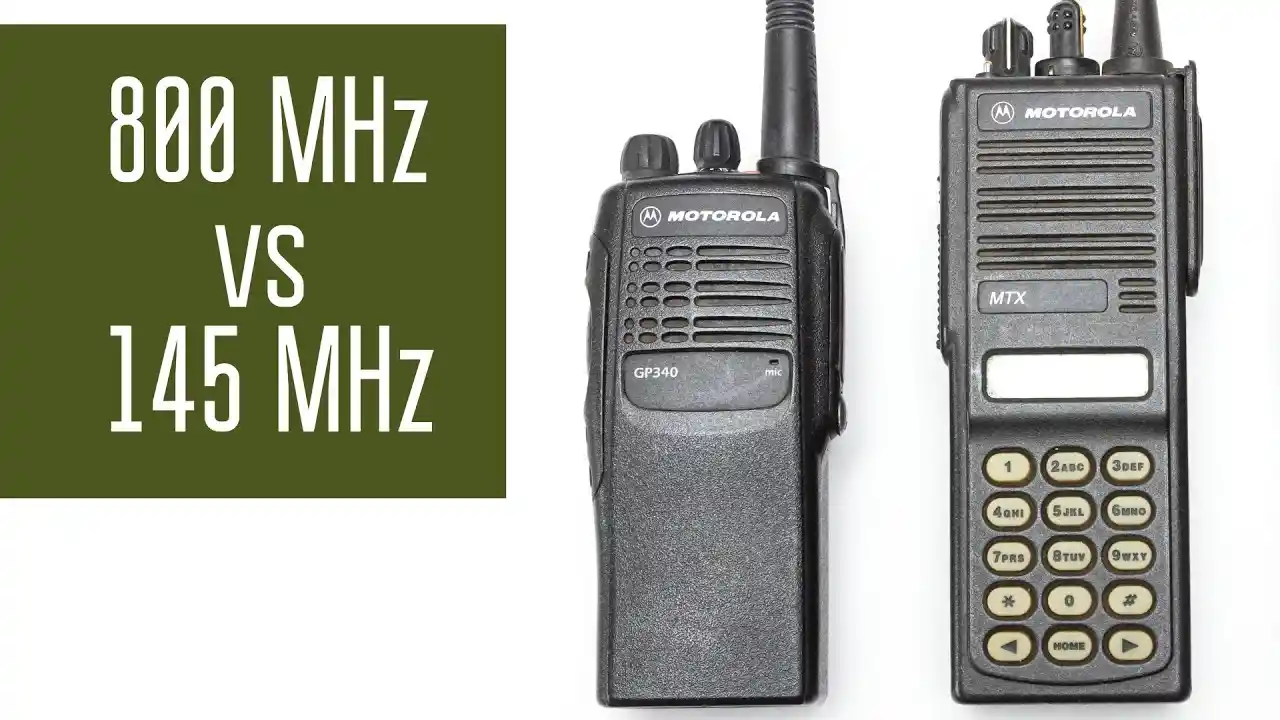
An 800 MHz radio is a two-way communication device operating within the ultra-high frequency (UHF) spectrum, specifically covering the 764 to 870 MHz range. This band is a cornerstone of modern professional communications due to its balance of range and signal penetration.
Public safety agencies, utilities, and large enterprises prefer 800 MHz over lower frequencies because it supports high-capacity trunked networks. These systems allow thousands of users to share a pool of channels efficiently. The band is particularly effective in dense urban environments where concrete structures can block lower-frequency signals.
What Is The 800 Mhz Band Used For?
The 800 MHz band serves as the primary backbone for public safety and municipal trunked systems. Agencies use this spectrum for mission-critical voice and data transmissions, including dispatch coordination, field reporting, and emergency alerts.
In densely populated areas, the band supports both voice and data applications simultaneously. This capability allows first responders to access database queries or send status updates without clogging voice channels. Government entities favor this range because it offers reliable coverage with fewer repeater sites compared to VHF, reducing infrastructure costs while maintaining performance.
Is 800 Mhz Uhf Or Vhf?
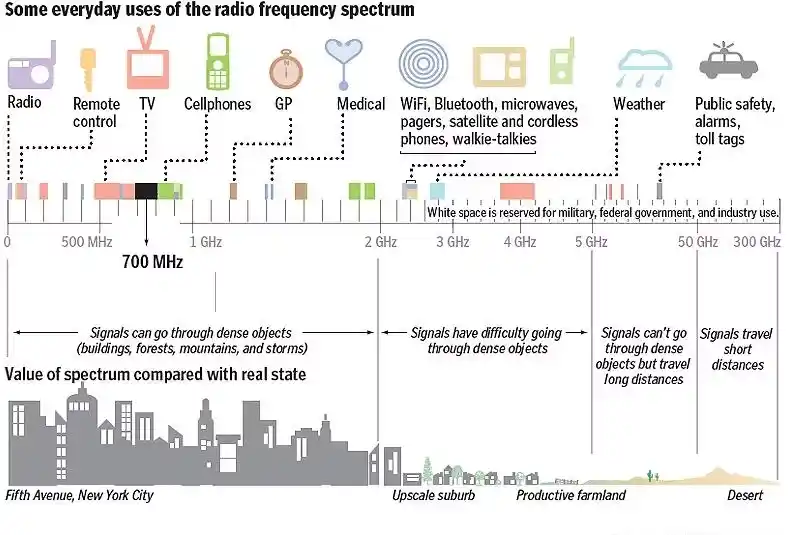
800 MHz is classified as a high-band UHF frequency. It sits well above the VHF range, which typically spans 30 to 300 MHz, and falls within the UHF spectrum of 300 MHz to 3 GHz.
The propagation characteristics differ significantly between these bands. VHF signals travel farther in open, rural terrain but struggle to penetrate buildings. UHF signals at 800 MHz have shorter wavelengths that navigate around obstacles and pass through walls more effectively. This makes 800 MHz the superior choice for operations inside structures or within city canyons where line-of-sight is frequently obstructed.
Are Your Radios Failing In Emergencies
Communication failures and interoperability gaps can put operations at risk during critical incidents. Discover how 800 MHz trunked systems improve penetration, reliability, and emergency coordination in demanding environments.
What Are The Key Features Of 800 Mhz Radios?
Professional 800 MHz radios include advanced features designed for reliability and security. Key capabilities often include support for digital trunking standards like P25 Phase I/II and DMR, which enable efficient spectrum use and cross-agency communication.
Encryption is standard on public safety models to protect sensitive information from unauthorized monitoring. Premium units also offer IP67 waterproofing and ruggedized casings to withstand harsh field conditions.
Using the correct antenna is critical. An antenna tuned for 800 MHz ensures optimal signal transfer. Using an incompatible antenna can reduce range significantly or cause reflected power that damages the radio’s transmitter over time.
Handheld portable units provide mobility for personnel on foot, while vehicle-mounted mobile radios offer higher power output and better range for units operating from cars or command centers.
Table 1: Portable vs Mobile 800 MHz Radio Comparison
| Feature | Handheld Portable | Vehicle-Mounted Mobile |
|---|---|---|
| Power Output | 1 to 5 Watts | 25 to 50 Watts |
| Range | Limited by terrain | Extended via external antenna |
| Use Case | Foot patrol, incident command | In-vehicle operations |
| Battery | Rechargeable pack | Vehicle power supply |
What Are The Best Motorola 800 Mhz Radio Models Available?
Motorola Solutions remains the industry leader in 800 MHz public safety communications. Their reputation stems from decades of deployment in mission-critical networks worldwide.
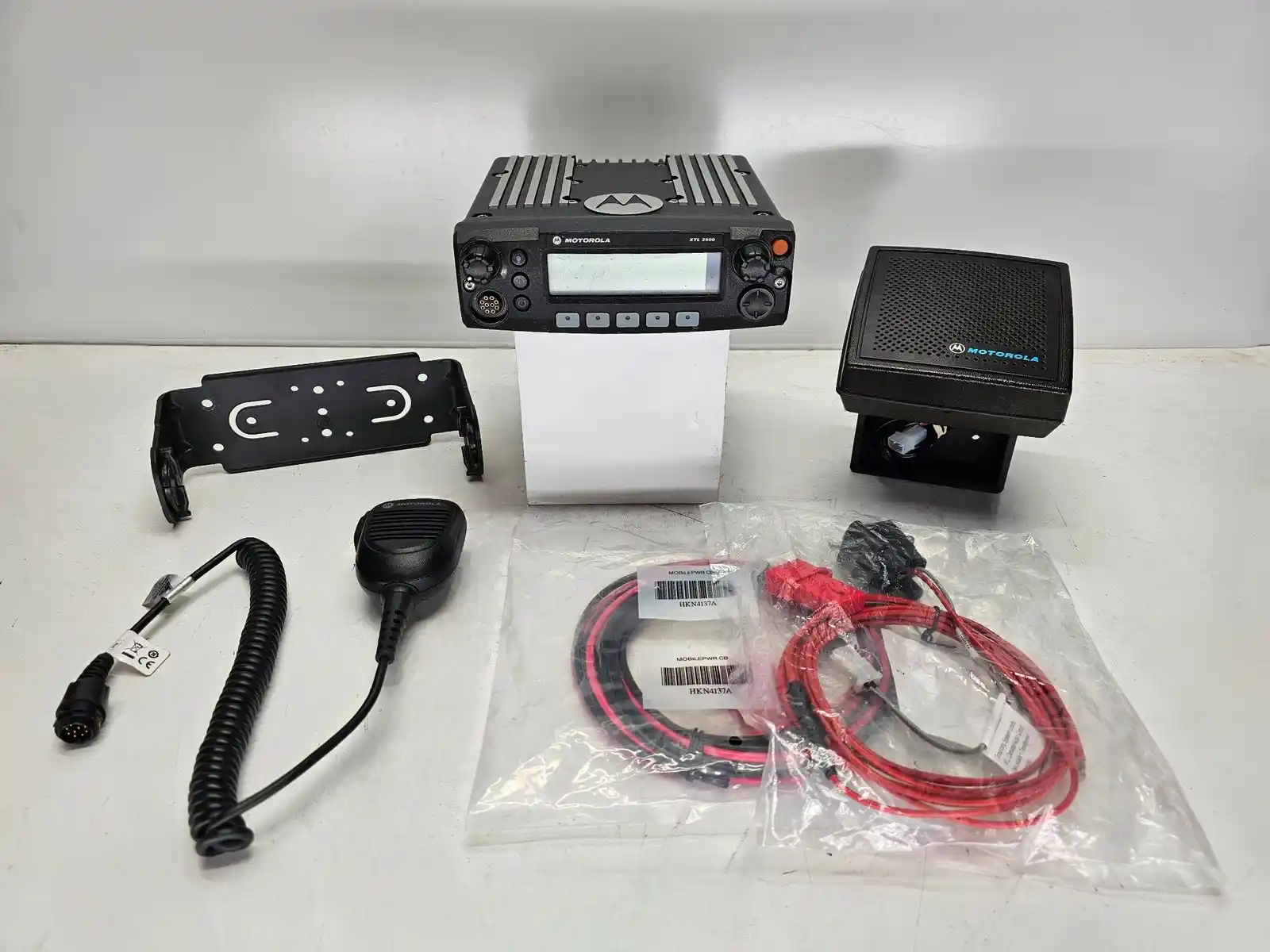
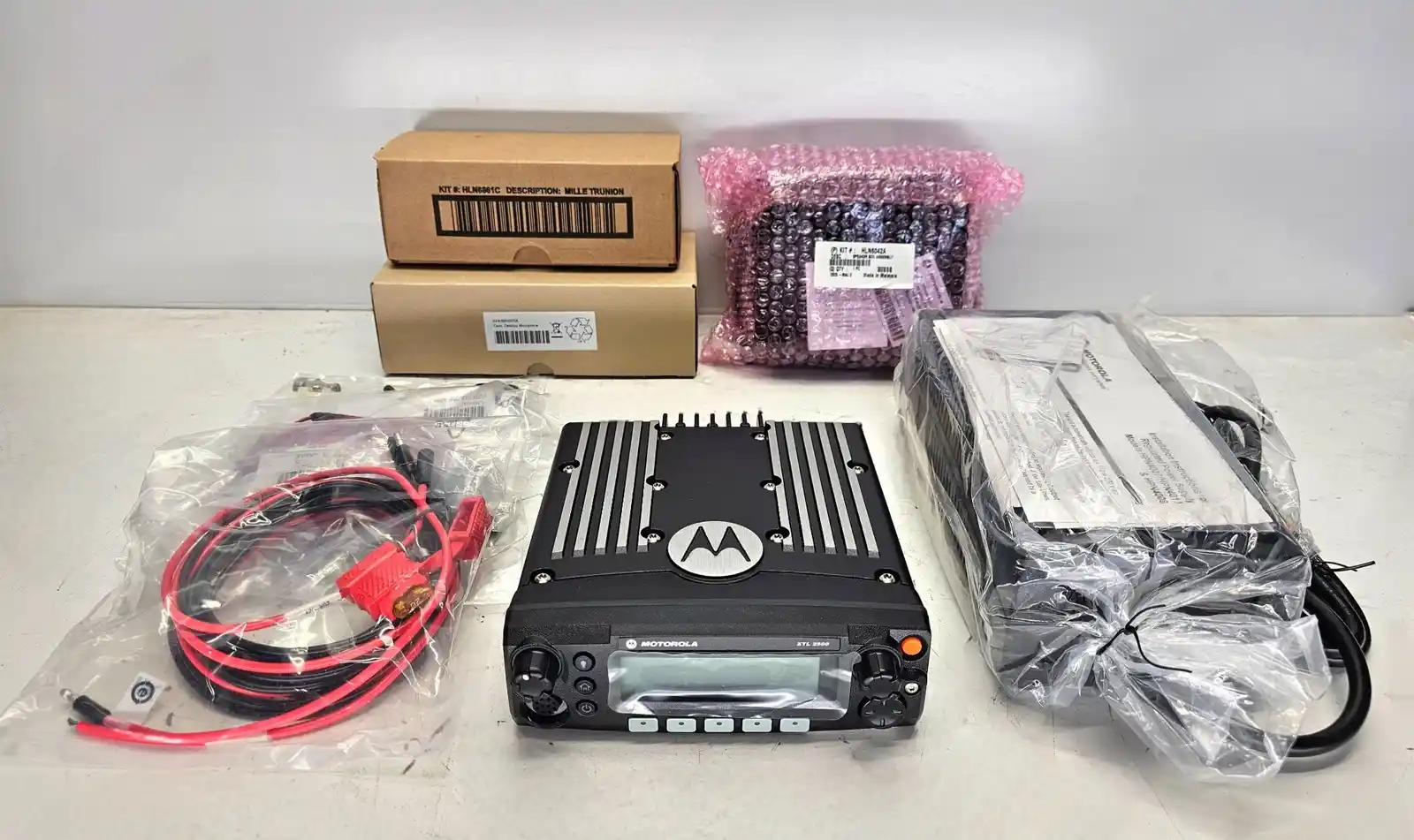
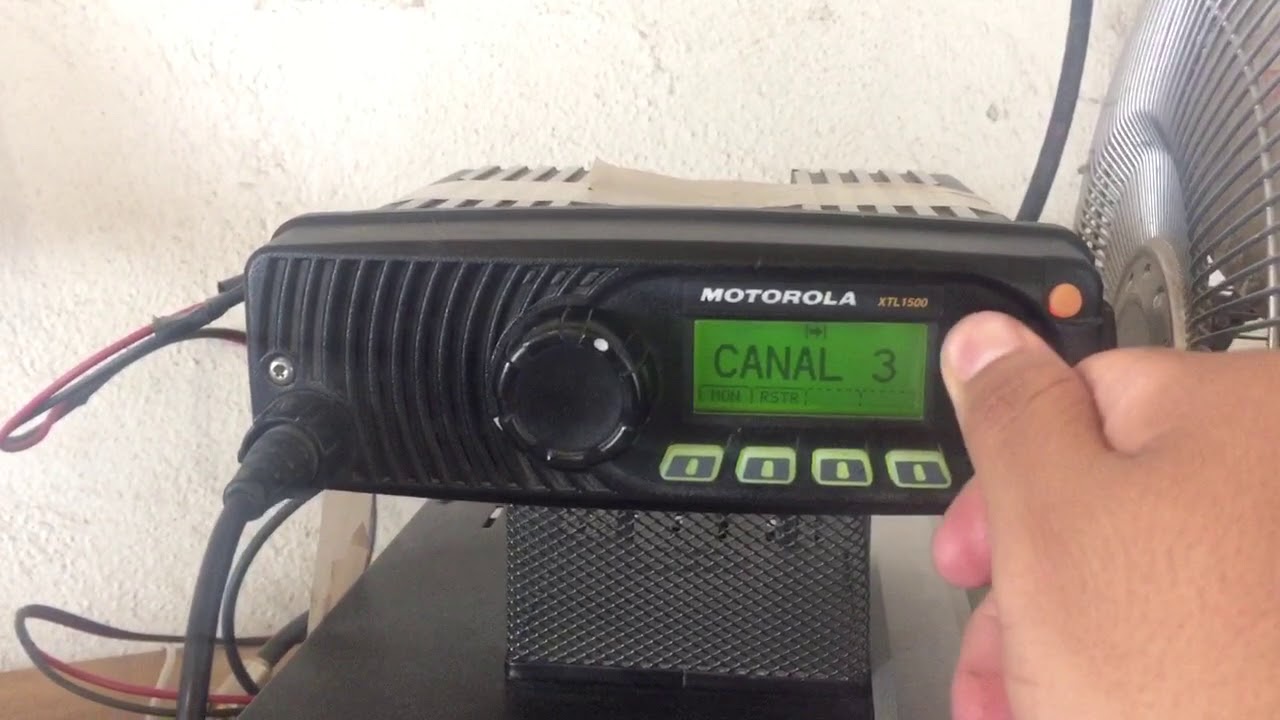
The APX 8000 is a top-tier multi-band handheld that includes 800 MHz capability. It offers advanced noise suppression, Wi-Fi connectivity for over-the-air programming, and robust encryption. The XTL 5000 is a legendary mobile radio known for its durability and clear audio in high-noise environments. For agencies seeking cost-effective digital options, the MOTOTRBO XPR Series provides DMR trunking support with reliable performance.
Selling Point: Browse our selection of certified Motorola 800 MHz radios. Shop new and used units with warranty options and fast shipping direct to your department or facility.
Motorola P25 And T800: What Sets Them Apart?
The P25 (Project 25) standard defines digital radio protocols that ensure interoperability between equipment from different manufacturers. Motorola radios fully support P25, allowing seamless communication across agencies using compliant gear.
The T800 model leverages P25 to provide secure, clear digital audio. Unlike analog radios, which degrade with distance and interference, P25 digital signals maintain audio quality until the edge of coverage. Digital advantages include better spectral efficiency, integrated data services, and enhanced encryption options that analog systems cannot match.
Where Can You Find Used 800 Mhz Radios For Sale?
The market for refurbished 800 MHz radios offers significant savings for budget-conscious agencies. Reputable vendors test units for functionality, update firmware, and certify performance before sale.
When purchasing used equipment, verify that the radio supports current rebanding requirements. Some older models may need hardware or software updates to operate on modified frequency plans. Ensure the seller provides programming services or that your team has the necessary code plugs and licensing to configure the radio legally.
What Are 700/800 Mhz Dual Band Radios And Who Uses Them?
Dual-band 700/800 MHz radios cover both spectrum segments in a single device. This capability is essential for agencies that operate in regions where neighboring jurisdictions use different allocations.
Interoperability often requires dual-band support. For example, a county agency on 800 MHz may need to communicate with a state police force using 700 MHz during joint operations. Dual-band radios eliminate the need to carry multiple devices, streamlining operations and reducing equipment costs.
What Makes The Motorola 700 Mhz Radio Different From An 800 Mhz Model?
The 700 MHz and 800 MHz bands differ in frequency allocation and signal characteristics. The 700 MHz band sits slightly lower, offering marginally better range in open areas, while 800 MHz excels in urban penetration.
Licensing also varies. The 700 MHz band includes allocations specifically designated for public safety broadband initiatives. Agencies choose 700 MHz-capable devices when their network infrastructure operates in that band or when future-proofing for broadband integration. Strictly 800 MHz units are suitable for established trunked systems that do not require 700 MHz access.
Table 2: 700 MHz vs 800 MHz Band Comparison
| Factor | 700 MHz Band | 800 MHz Band |
|---|---|---|
| Frequency Range | 698 to 806 MHz | 764 to 870 MHz |
| Propagation | Slightly better range | Superior building penetration |
| Primary Use | Public safety broadband | Trunked voice systems |
| Interoperability | Growing adoption | Established standard |
What Radio Frequencies Do Police And Law Enforcement Use?
Law enforcement agencies predominantly use licensed trunked 800 MHz systems for daily operations. These networks provide secure, prioritized channels for dispatch and field units.
Digital encryption is standard on these frequencies to protect officer safety and operational integrity. Encryption prevents unauthorized parties from monitoring sensitive communications. Public access to these channels is restricted by design.
Civilians must understand that monitoring encrypted channels is impossible with standard scanners. Additionally, transmitting on these frequencies without a license is illegal and can result in severe FCC penalties.
What Radio Frequency Does The Fbi Use?
Federal agencies, including the FBI, operate on licensed frequency bands that are separate from local public safety allocations. These systems often use encrypted digital protocols to ensure secure communications.
Federal frequencies are generally inaccessible to civilian scanners due to encryption and access controls. Attempting to monitor or interfere with these communications violates federal law. Civilians should rely on official public information channels for updates rather than attempting to access restricted radio traffic.
Are There Frequencies That Are Illegal To Listen To?
Certain frequencies are legally restricted from monitoring. Encrypted public safety bands, cellular communications, and private scrambled channels cannot be legally intercepted or decoded.
The distinction lies between licensed broadcast frequencies, which are legal to receive, and private encrypted channels, which carry restrictions. While owning a scanner is legal in most areas, using it to facilitate a crime or intercept protected communications is prohibited.
A common misconception involves the 600 MHz band. Following the FCC incentive auction, much of this spectrum was reallocated for commercial wireless use. Monitoring restrictions apply, and transmitting without proper licensing remains illegal.
What Is An 800 Mhz Trunked Radio System?
A trunked radio system uses a central controller to manage a pool of channels. When a user presses the push-to-talk button, the system automatically assigns an available frequency for that transmission.
This method maximizes efficiency by allowing many users to share fewer channels. Municipal and emergency services favor trunking because it reduces congestion and ensures critical calls get through. The system controller handles all channel assignments, so users do not need to manually select frequencies.
Selling Point: Contact us today to get expert help selecting the right trunked 800 MHz radio system for your agency. Our specialists are ready to assist.
How Does The Harris 800 Mhz Radio Compare To Motorola?
L3Harris Technologies is a primary competitor in the 800 MHz market, offering robust alternatives to Motorola equipment. Harris radios are known for their durability and advanced feature sets.
The Harris XG-75M mobile and XL-200P portable models provide full P25 compliance and secure communications. Compared to Motorola, Harris units often offer competitive pricing and flexible programming options.
The choice between brands depends on agency requirements. Motorola may be preferred for existing ecosystem compatibility, while Harris can offer cost savings and strong performance for mixed-vendor networks. Evaluate total cost of ownership, support contracts, and interoperability needs before deciding.
What Is A Legal Walkie-Talkie A Civilian Can Have?
Civilians can legally use walkie-talkies operating on GMRS, FRS, and MURS frequencies. These bands are designated for personal and family use without the need for complex licensing, though GMRS requires a simple FCC license.
The 800 MHz public safety spectrum is strictly licensed and unavailable for civilian use. Operating on these frequencies without authorization can cause harmful interference and result in legal action.
Consumer-grade walkie-talkies differ significantly from professional 800 MHz radios. They lack the power, durability, and encryption required for mission-critical operations. Civilians should select FRS or GMRS devices for recreational use and ensure compliance with FCC power limits.
Table 3: Civilian vs Professional Radio Frequencies
| Service | Frequency Band | License Required | Power Limit |
|---|---|---|---|
| FRS | 462 to 467 MHz | No | 2 Watts |
| GMRS | 462 to 467 MHz | Yes (FCC) | 50 Watts |
| MURS | 151 to 154 MHz | No | 2 Watts |
| 800 MHz | 764 to 870 MHz | Yes (Agency) | Varies by license |
Frequently Asked Questions About 800 Mhz Radio
Frequently Asked Questions About 800 Mhz Radio
An 800 MHz radio is a UHF communication device operating between 764 and 870 MHz. It is used primarily by public safety agencies and enterprises for reliable voice and data transmission in urban environments and trunked networks.
How Does An 800 Mhz Trunked Radio System Work?
A trunked system uses a controller to assign channels dynamically from a shared pool. Radios request a channel when transmitting, and the system allocates an available frequency automatically, improving efficiency and reducing wait times.