
Blog
Analog Radio Vs Digital Radio: Audio Clarity And Modulation Work
Analog and digital radios serve different communication needs, but choosing the right one depends on your budget, range requirements, and security priorities. I have spent years working with two-way radio systems across construction, logistics, and emergency services. This guide draws on that firsthand experience to break down signal behavior, modulation differences, and real-world performance so you can make a confident decision for your team.

Key Takeaways
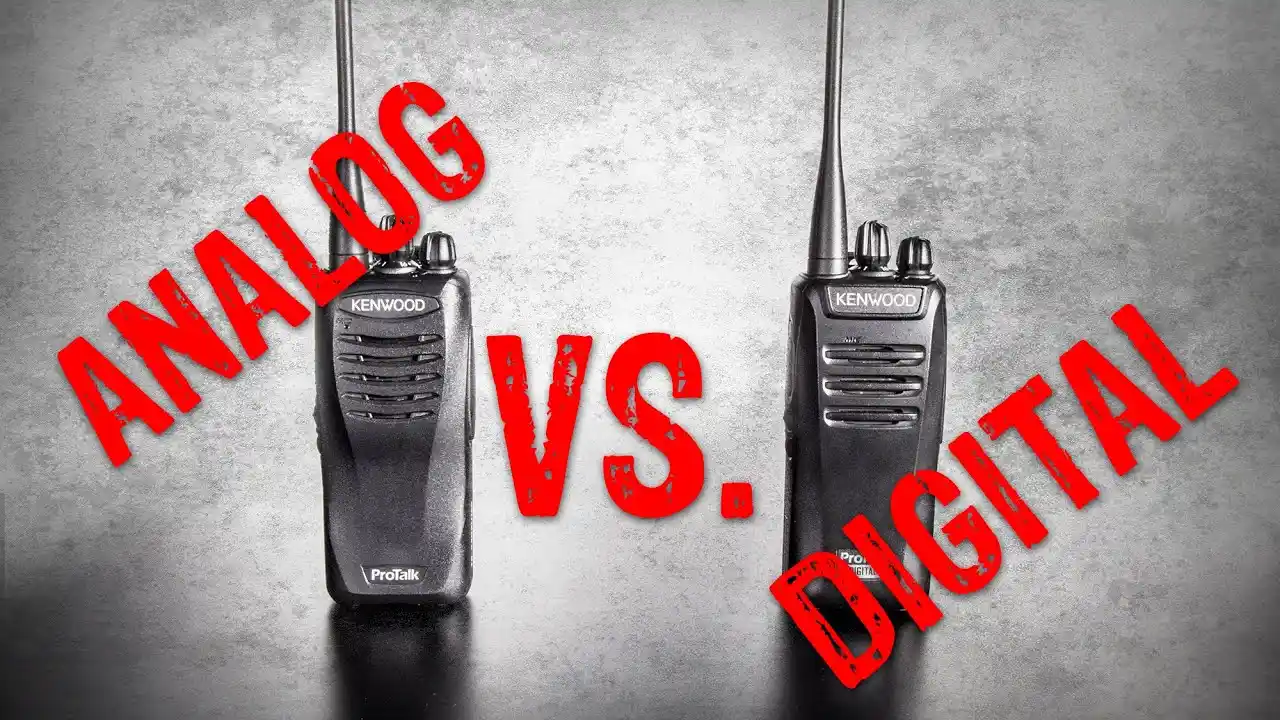
- Analog radios transmit continuous waveforms that mirror sound directly, making them affordable and simple but limited in range and security.
- Digital radios convert voice into binary data, delivering clearer audio, built-in encryption, longer usable range, and features like GPS tracking and text messaging.
- Migration to digital (e.g., DMR) can extend battery life by up to 25% and double channel capacity, making it a strong choice for growing organizations.
Table of Contents
Analog Radio Vs Digital Radio
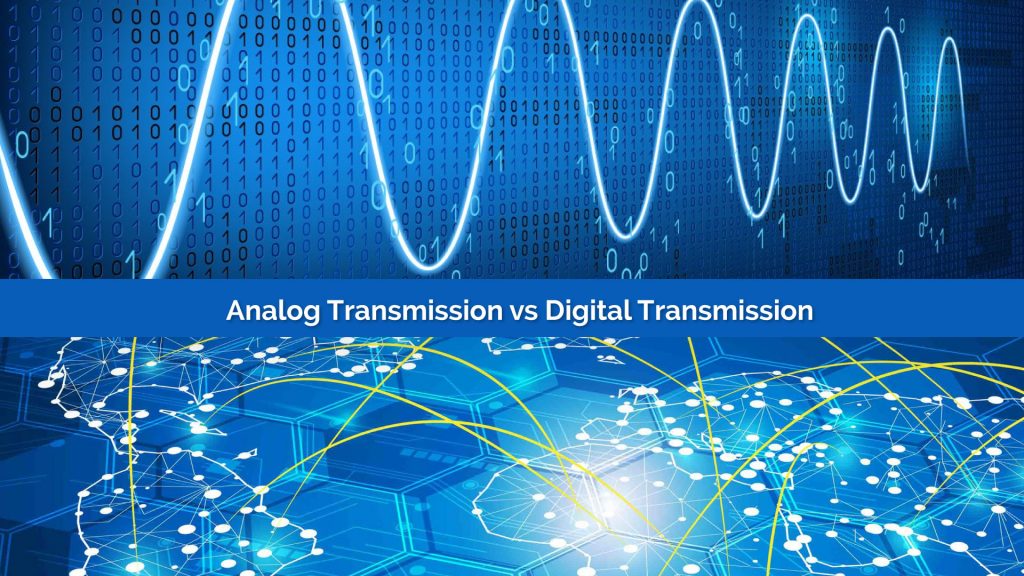
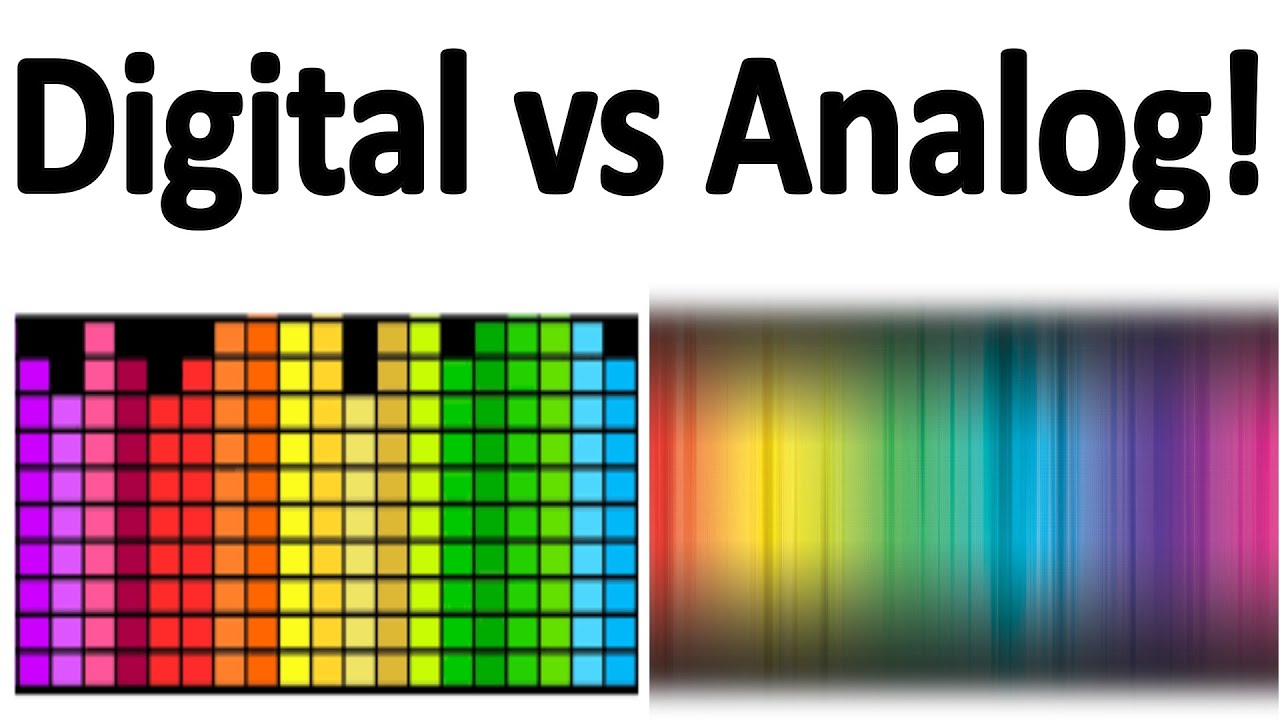
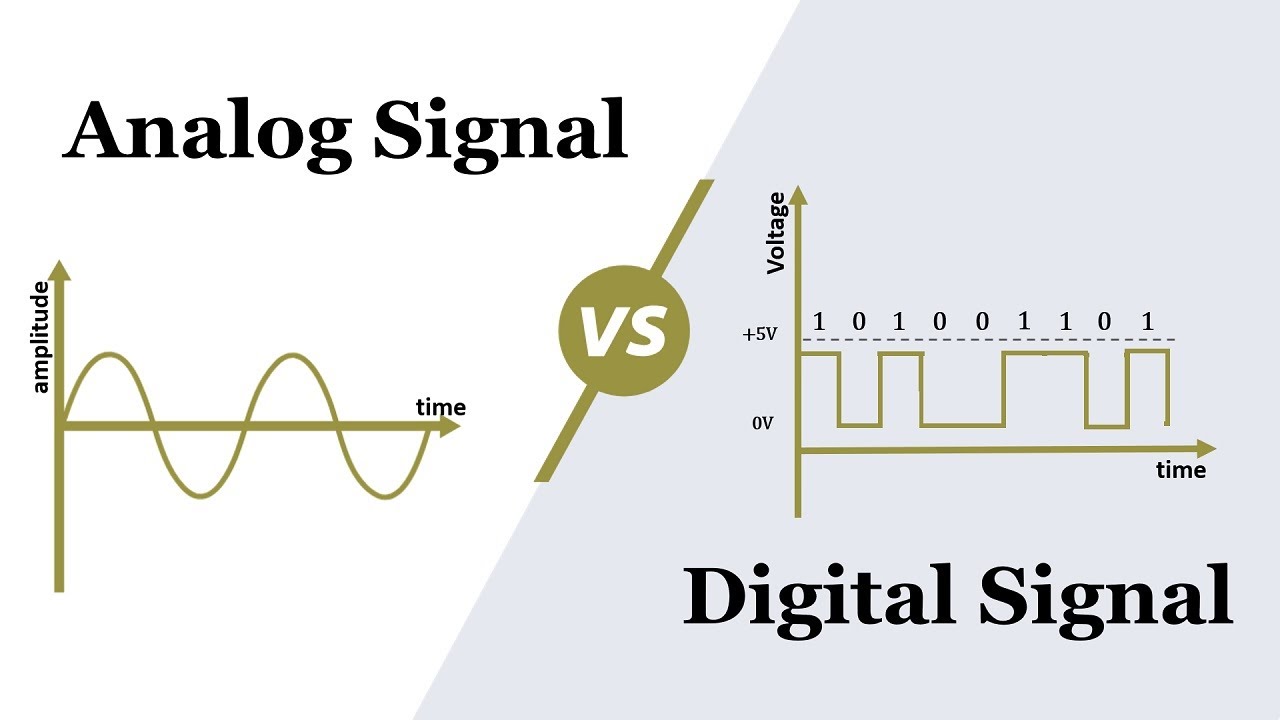
Analog radio transmits voice as a continuous electrical signal that directly replicates the original sound wave. Think of it like drawing a smooth, unbroken line on paper. Digital radio converts voice into binary code (ones and zeros), packages it into data packets, and transmits those packets over the air. Imagine instead writing a series of dots and dashes that a receiver reassembles into the original message.
The core difference lies in signal transmission. Analog uses continuous waveforms, while digital relies on discrete data streams. This fundamental distinction affects everything: audio clarity, range, battery life, security, and the types of features each system supports.
Here is a quick side-by-side comparison:
| Feature | Analog Radio | Digital Radio |
|---|---|---|
| Signal Type | Continuous waveform | Binary data packets |
| Audio Quality | Degrades over distance | Clear until coverage boundary |
| Encryption | None | AES-128 or higher |
| Battery Efficiency | Standard | Up to 25% more efficient |
| Channel Capacity | One conversation per frequency | Two conversations per frequency |
What Is Analog Radio And How Does It Work?
Analog radio transmits voice as a continuous electrical signal that mirrors the original sound wave. Two primary modulation methods carry audio onto a carrier signal:
Amplitude Modulation (AM) varies the strength of the carrier wave to encode audio. It works over long distances but is susceptible to static and electrical interference.
Frequency Modulation (FM) varies the frequency of the carrier wave. FM provides better noise resistance than AM, which is why it became the standard for most two-way radio communication.
Industries where analog radio remains common include small businesses, taxi services, hobbyist communities, and local operations. The equipment is straightforward, affordable, and requires minimal training. Many organizations continue using legacy analog systems because replacing functional infrastructure carries real costs.
What Is Digital Radio And How Does Digital Transmission Work?
Digital radio converts voice signals into binary code before transmitting them as data packets. Voice is first digitized using codecs such as G.711 or G.722, then compressed and packetized for transmission.
DMR (Digital Mobile Radio) is one of the most widely adopted digital standards. It uses TDMA (Time-Division Multiple Access) to split a single frequency into time slots, allowing two simultaneous conversations on one channel.
Error correction systems like Forward Error Correction (FEC) add redundancy to data packets. The receiver uses this extra information to rebuild corrupted signals without requiring retransmission. This is why digital radios maintain clarity at distances where analog signals become noisy and unintelligible.
Digital radios also support simultaneous voice and data communication. Operators can send text messages, GPS coordinates, and emergency alerts without interrupting voice channels.
Still Unsure Which Radio Fits Your Needs?
Struggling to balance budget, range, and security? Discover how analog and digital radios compare so you avoid costly communication gaps in real-world operations.
Are Radio Waves Analog Or Digital In Nature?
Radio waves are electromagnetic waves, which means they are inherently analog phenomena. The electromagnetic spectrum carries continuous variations in amplitude and frequency.
Digital communication does not change the physical nature of the wave. It simply encodes data onto the analog wave using modulation techniques. The wave itself remains analog; the information it carries can be either analog or digital.
How Does Signal Range And Coverage Compare For Analog Vs Digital Radio?
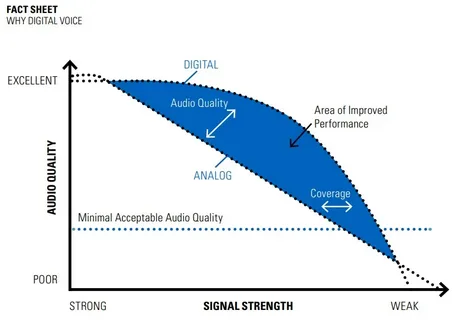
Analog signals weaken gradually as distance increases. Audio becomes progressively noisier until it drops below intelligibility. Digital signals behave differently. They remain clear and crisp right up to the edge of coverage, then cut off sharply.
This “cliff effect” actually benefits users in practice. With analog, you spend time straining to understand garbled audio. With digital, you either hear the message clearly or know immediately that you are out of range.
According to industry testing, digital technology often delivers 20 to 30 percent more usable range with the same transmission power compared to analog. This comes from FEC and advanced modulation techniques that compress signal degradation.
Terrain, buildings, and environmental conditions affect both technologies. Mountains, dense urban structures, and thick walls reduce coverage. However, digital error correction mitigates interference more effectively in challenging environments.
Why Are Digital Radios Better Than Analog For Battery Life And Channel Capacity
Digital radios use power-efficient technologies like TDMA time slots to extend battery life. In a TDMA system, the transmitter only activates during its assigned time slot rather than continuously. This reduces idle power consumption by approximately 20 to 25 percent compared to analog radios operating on the same battery.
Digital systems also split a single frequency into multiple communication slots. A standard DMR channel hosts two half-duplex conversations simultaneously. For organizations managing large fleets, this means fewer frequencies needed, simpler network planning, and lower repeater costs.
Key Takeaway: If your team uses radios for eight or more hours per shift, digital TDMA technology can meaningfully reduce the number of battery swaps or charges needed during a workday.
What Advanced Features Does Digital Radio Offer Over Analog?
Modern digital radios provide capabilities that analog systems simply cannot match:
- Text messaging without interrupting voice channels
- GPS tracking for fleet management and personnel safety
- Remote device monitoring for configuration and battery status checks
- Emergency alerts with pre-programmed safety protocols
- AES-128 encryption protecting sensitive communications from interception
These features improve coordination across industries. Construction crews track equipment locations. Hospitality staff manage service requests via text. Logistics firms optimize delivery routes with real-time location data. Security teams coordinate responses using encrypted emergency alerts.
Where Does Analog Radio Fall Short Compared To Digital
Analog radio lacks encryption entirely. Anyone with a compatible receiver can listen to transmissions. It also uses spectrum inefficiently, requiring dedicated frequencies for each conversation. In congested RF environments, analog signals are more prone to static, crosstalk, and signal dropouts.
What Are The Pros And Cons Of Choosing Analog Over Digital Radio?
| Category | Analog Pros | Analog Cons |
|---|---|---|
| Cost | Lower purchase price | Higher long-term frequency costs |
| Simplicity | Easy to operate, no training needed | No advanced features |
| Compatibility | Works with legacy infrastructure | Limited upgrade path |
| Audio | Natural voice quality up close | Degrades quickly over distance |
| Security | None | Vulnerable to eavesdropping |
| Category | Digital Pros | Digital Cons |
|---|---|---|
| Cost | Lower frequency licensing costs | Higher upfront equipment investment |
| Features | GPS, text, encryption, remote management | Requires training for full utilization |
| Range | 20-30% more usable distance | Sharp cutoff at coverage boundary |
| Battery | 20-25% longer battery life | Compatible batteries may cost more |
| Scalability | More channels per frequency | Migration requires planning |
Dmr Vs Analog Radio And What Sets Them Apart
DMR (Digital Mobile Radio) is an open standard developed by ETSI (European Telecommunications Standards Institute). It was designed specifically for professional two-way communication systems.
Compared to analog, DMR offers superior scalability, interoperability across manufacturers, and advanced operational features. Organizations adopt DMR as a migration path because it supports dual-mode operation. During transition, radios can communicate on both analog and digital channels, preserving continuity.
According to ETSI TS 102 622, DMR operates in 12.5 kHz channel bandwidths and supports both direct mode (radio-to-radio) and repeater mode (infrastructure-based) operation.
Are Walkie Talkies Analog Or Digital
Many consumer walkie-talkies are traditionally analog devices operating on PMR446 or FRS frequencies. However, modern professional models increasingly include digital capabilities. To identify digital support, check product specifications for terms like “DMR,” “Digital Mode,” or supported protocols. Professional-grade walkie-talkies from manufacturers like Motorola, Kenwood, and Hytera now commonly offer dual-mode operation.
Digital Vs Analog Ham Radio And Which One Enthusiasts Prefer
Amateur radio operators use both analog and digital communication modes. Traditional analog voice (phone and CW/Morse code) remains popular for its simplicity and directness.
Digital ham radio modes like FT8, PSK31, and DMR improve weak-signal communication and data exchange. These modes compress signals, reducing bandwidth requirements while maintaining clarity. Operators can communicate globally on low power using digital modes that would be impossible with analog alone.
The choice often depends on the operator’s goals. Those who enjoy vintage equipment and traditional communication prefer analog. Operators focused on long-distance contacts, data modes, and experimentation lean toward digital.
How To Migrate From Analog To Digital Radio Systems Successfully
Here is the process I recommend based on multiple migration projects:
- Assessment – Inventory existing equipment, map coverage areas, and identify critical communication gaps.
- Standard Selection – Choose a digital standard (DMR is most common for commercial use) and select compatible hardware.
- Phased Rollout – Deploy dual-mode radios so analog and digital channels operate simultaneously during transition.
- Training – Conduct hands-on workshops covering new features, encryption settings, and troubleshooting.
- Field Testing – Verify range, audio quality, GPS accuracy, and messaging reliability across all coverage areas.
- Full Transition – Gradually replace analog units and retire legacy infrastructure.
Dual-mode radios are critical during this process. They allow your team to communicate seamlessly across both systems while you phase in new equipment.
Branching Quiz: Do You Need a Digital Radio Upgrade?
Question 1: Does your team require secure or encrypted communication?
- Yes -> Go to Question 2
- No -> Go to Question 3
Question 2: Is extended range or advanced features (GPS, messaging) a priority?
- Yes -> Recommendation: Full digital migration (DMR). Your organization will benefit significantly from digital capabilities.
- No -> Recommendation: Selective digital upgrade for security-critical channels only.
Question 3: Do you manage more than 20 radios across your operations?
- Yes -> Recommendation: Begin planning digital migration for channel capacity and battery savings.
- No -> Recommendation: Analog may still meet your needs. Revisit when your team grows.
When Should You Choose Analog Radio And When Should You Choose Digital?
Choose analog when budget is the primary constraint, your team is small (under 10 users), communication needs are simple voice-only, and range requirements are short (under one mile).
Choose digital when your organization needs secure communication, operates across large facilities or wide geographic areas, requires advanced features like GPS or messaging, or manages a fleet of 20 or more radios.
Practical examples from industries I have worked with: a small restaurant uses analog for front-desk paging because cost and simplicity matter most. A regional construction company chose DMR digital for site supervisors who need GPS tracking and encrypted safety communications across multiple job sites.
Why Smart Radios Outperform Both Analog And Digital Radio Systems?
Smart radios integrate cellular networks (LTE/5G) with traditional two-way radio communication. They combine the immediacy of push-to-talk radio with the nationwide coverage of cellular infrastructure.
Key advantages include nationwide reach without repeater infrastructure, application integration with CRM and asset-tracking platforms, and cloud-based management tools for remote monitoring, firmware updates, and usage analytics.
For organizations with field teams spread across wide geographic areas, smart radios eliminate coverage gaps that traditional radio systems cannot address without significant infrastructure investment.
Frequently Asked Questions About Analog Radio Vs Digital Radio
What Is The Difference Between Analog Radio Vs Digital Radio?
Analog radio transmits voice as a continuous waveform that mirrors the original sound, offering simplicity and lower cost but limited range and no encryption. Digital radio converts voice into binary data packets, providing clearer audio, extended range through error correction, built-in encryption, and advanced features like GPS tracking and text messaging.
How Do I Migrate From Analog To Digital Radio Systems?
Begin with a thorough inventory of your existing equipment and coverage requirements. Select a digital standard such as DMR, then deploy dual-mode radios to maintain communication during transition. Train your team on new features, conduct field testing, and complete a phased rollout. Working with a communication specialist ensures your migration plan aligns with your operational needs and budget.