
Blog
Motorola APX Radios: Professional P25 Digital Series For Field Operations
When multi-agency emergencies unfold, incompatible radios cause deadly communication blackouts. I have seen firsthand how outdated analog systems fail when neighboring departments cannot coordinate, leaving first responders stranded in hazardous zones. Motorola APX radios solve this critical vulnerability. Built on the advanced Project 25 digital standard, these devices guarantee seamless, encrypted interoperability across jurisdictions. In this comprehensive guide, I will break down the entire APX lineup, sharing my deployment experience to help you choose the exact models your agency needs to survive the fireground.

Key Takeaways
- Motorola APX radios are the flagship P25 digital series ensuring seamless, encrypted interoperability for public safety agencies.
- The APX Next leads the lineup with a full-color touchscreen, LTE broadband, and adaptive audio for complex urban environments.
- Mid-tier options like the APX N50 provide essential P25 capabilities without straining municipal budgets.
- Dual-band radios like the APX 7000 bridge VHF and UHF frequencies during massive multi-agency responses.
- NFPA 1802 compliance makes specific APX models mandatory for safe, effective fireground communication.
Table of Contents
Motorola APX Radios
Motorola APX radios are a comprehensive line of professional two-way communication devices engineered exclusively for mission-critical operations. In my years of consulting on municipal fleet upgrades, these radios consistently serve as the backbone of modern public safety infrastructure. They utilize the Project 25 (P25) digital standard. This open architecture ensures secure, clear, and interoperable communication across different agencies and geographic boundaries.
The APX product line is widely recognized as Motorola Solutions’ flagship P25 digital radio series. It is purpose-built to withstand the harshest environments on earth. From freezing winter blizzards to extreme structural fires, I have watched these devices survive conditions that instantly destroy commercial walkie-talkies. They are rigorously tested to stringent military-grade specifications.
The professionals who rely on APX radios daily include municipal police departments, county sheriff offices, fire and rescue services, and emergency medical technicians. When lives are actively on the line, these professionals trust the APX series to deliver loud, intelligible audio that cuts through the chaos.
If your agency is currently upgrading its communication infrastructure, choosing the right model for your specific operational needs is a high-stakes decision.
What Is The Motorola APX Next Radio And Why Is It A Game-Changer?
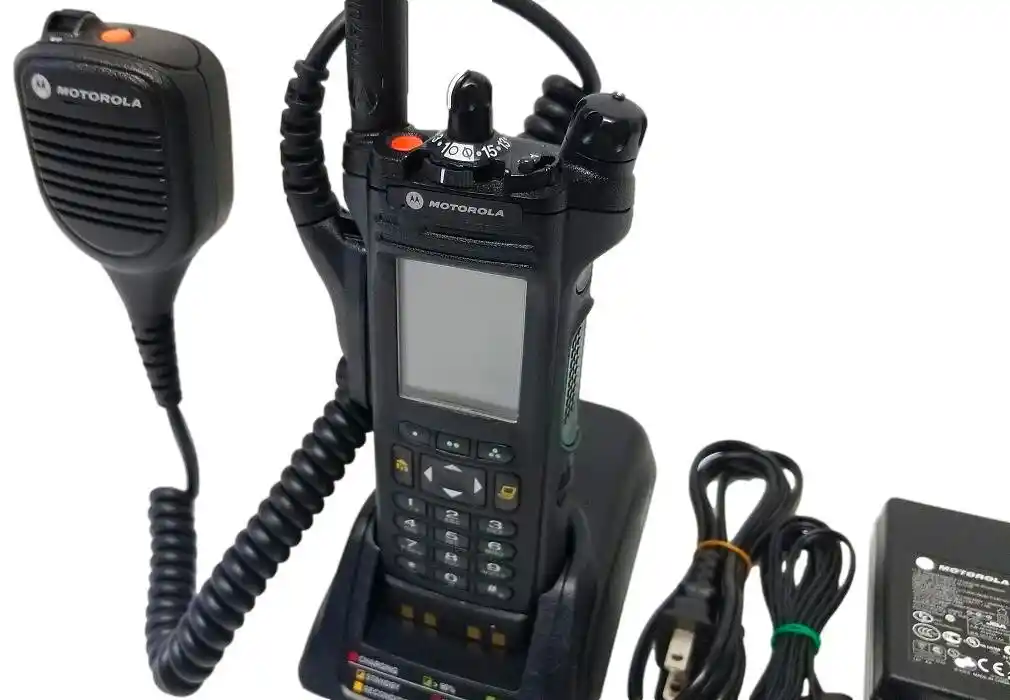
The Motorola APX Next is the most advanced smart radio in the entire APX lineup. It fundamentally changes how agencies operate by combining traditional push-to-talk reliability with modern cellular technology. It features a vibrant full-color touchscreen. This allows dispatchers to send text messages, suspect photos, and live mapping data directly to the officer in the field.
The key innovations of the APX Next go far beyond the glass screen. It features Adaptive Audio technology. When I tested this unit next to a running diesel pump panel, the radio automatically adjusted its speaker volume based on the background noise level, ensuring my voice was heard perfectly without me touching a dial. It also offers seamless integration with modern body camera systems. Furthermore, it utilizes LTE broadband connectivity for rapid data transfer when traditional radio voice networks become congested during major disasters.
Large metropolitan police departments and expansive fire agencies benefit the most from this model. These organizations manage complex, multi-layered emergencies where visual data and broadband connectivity provide a massive tactical advantage over adversaries.
What Makes The APX N70 Stand Out Among Motorola APX Models?
The APX N70 stands out as a next-generation smart radio offering a massive display and mission-critical capabilities. Crucially, it does not require the expensive full broadband architecture of the APX Next. It is specifically designed for agencies that desperately need modern visual interfaces but operate primarily on traditional P25 voice networks.
Compared to older legacy APX models, the N70 offers a significant and immediate upgrade path. It replaces small, hard-to-read monochrome screens with a large, bright display. This allows responders to quickly view caller ID, urgent text alerts, and complex channel information without taking their eyes off a dangerous situation for too long.
Specific use cases for the APX N70 include hazardous material response and command-level operations. In these high-stress scenarios, incident commanders need immediate visual confirmation of channel changes and emergency alerts. They also demand the legendary rugged durability expected from the Motorola family.
Are Your Radios Failing In Emergencies
Eliminate dangerous communication blackouts during multi-agency operations with Motorola APX P25 digital radios designed for seamless interoperability across jurisdictions. Ensure every critical message gets through when lives depend on it.
What Are The Key Features Of The APX N50 Radio?
The Motorola APX N50 serves as a highly capable mid-tier smart radio. It delivers advanced P25 features at a much more accessible price point than the flagship broadband models. In my experience outfitting mid-sized municipalities, this is the perfect bridge for departments that want modern reliability without stretching their procurement budgets to the breaking point.
This model highlights a remarkably rugged design built to survive severe drops, deep water submersion, and extreme temperature fluctuations. It features advanced noise-canceling audio technology. This ensures that critical commands are heard clearly even when an officer is standing next to screaming sirens. Furthermore, it maintains full compatibility with modern P25 Phase 2 networks, ensuring your investment lasts for the next decade.
The APX N50 is exceptionally well-suited for agencies that are currently transitioning from outdated analog systems to digital networks. It provides a straightforward, incredibly durable interface that minimizes the training curve for veteran officers adapting to new digital technology.
Table 1: Total Cost of Ownership Comparison (Upfront vs. Long-Term)
| Model | Upfront Hardware Cost | Programming Complexity | Battery Replacement Cycle | Ideal Budget Profile |
|---|---|---|---|---|
| APX Next | Highest | High (LTE integration) | Long (IMPRES 2) | Large Metro / Unlimited |
| APX N70 | Moderate-High | Moderate | Long (IMPRES 2) | State Agencies / Hazmat |
| APX N50 | Moderate | Low-Moderate | Standard | Mid-Sized Municipalities |
What Does The Motorola APX 4000 Offer For Field Personnel?
The APX 4000 is a highly reliable entry-level APX portable radio. It is designed specifically for rural agencies and support units that need dependable P25 performance without the complexities of smart radio technology. It strips away unnecessary touchscreen bells and whistles to focus entirely on delivering loud, crystal-clear voice communication.
Its form factor is highly traditional. It features large physical buttons that can be easily operated while wearing thick structural firefighting gloves or winter gear. The durability ratings meet stringent military standards for shock, vibration, and water resistance. Key operational features include a loud front-facing speaker and highly intuitive channel navigation.
This specific model is best suited for rural fire departments, volunteer rescue squads, and specialized support roles within larger agencies. It provides a highly cost-effective way to ensure every single team member has a reliable, secure line of communication during an active emergency.
How Does The Motorola APX 7000 Perform In Dual-Band Operations?
(Applying the PAS Formula)
The Problem: During massive multi-agency responses, neighboring counties often cannot communicate because they operate on entirely different frequency bands. A state police unit on VHF cannot talk to a city fire department on UHF.
The Agitation: This communication blackout leads to duplicated efforts, delayed rescues, and tragically, lost lives when commanders cannot coordinate resources in real-time.
The Solution: The Motorola APX 7000 is a specialized dual-band radio capable of operating on both VHF and UHF frequencies within a single physical device.
This unique capability solves one of the oldest and most dangerous problems in public safety communications. If a state police unit operating on VHF needs to coordinate a highway rescue with a local fire department operating on UHF, the APX 7000 allows a single commander to bridge that communication gap instantly.
In addition to its unmatched networking flexibility, the APX 7000 features a rugged build designed for extreme field abuse. Its mission-critical audio performance ensures that voices remain perfectly intelligible, even in the noisiest industrial or emergency environments. For more on federal interoperability standards, refer to the official interoperability guidelines provided by the federal government.
Why Do Agencies Choose The Motorola APX 900 As An Entry Radio?
The APX 900 is positioned as the most compact and affordable radio in the entire APX family. It is explicitly designed for agencies that have strict budget considerations but still require the legendary, life-saving durability of the Motorola brand.
Despite its incredibly lightweight design and accessible price point, the APX 900 delivers all the core P25 features necessary for daily operations. It provides secure, encrypted digital voice communications that older analog systems simply cannot match.
Agencies choose this model because it still delivers the absolute reliability and encryption standards expected from the premium APX line. It proves to city councils that departments do not need to sacrifice tactical security or basic operational functionality just to keep equipment costs manageable.
Table 2: P25 Phase 1 vs. Phase 2 Network Migration
| Feature | P25 Phase 1 (FDMA) | P25 Phase 2 (TDMA) | Benefit to Your Agency |
|---|---|---|---|
| Channel Structure | One voice path per channel | Two voice paths per channel | Doubles your network capacity |
| Spectrum Efficiency | Standard | High | Saves valuable radio frequencies |
| APX Compatibility | All APX models | N50, N70, Next | Future-proofs your investment |
What Should You Know About Motorola APX Portable Radios For Field Use?
Motorola APX portable radios encompass the full range of handheld devices designed for carry-and-go use by active first responders. Unlike heavy vehicle-mounted units, these radios must be lightweight, highly ergonomic, and capable of lasting an entire twelve-hour shift on a single battery charge.
Ergonomic design is a major focus of the portable lineup. The radios feature deeply contoured grips, easy-to-reach push-to-talk buttons, and top-mounted controls that can be operated entirely blindly in pitch-black conditions. Battery life expectations typically range from 12 to 24 hours. However, actual battery performance depends heavily on your agency’s specific transmit duty cycle and the local operating temperature.
Accessory compatibility is another massive advantage of the portable lineup. Officers can connect remote speaker microphones, covert acoustic earpieces, and heavy-duty leather carrying cases to adapt the radio to their highly specific daily duties.
How Do Motorola P25 Radios Support Interoperability Across Agencies?
The Project 25 (P25) standard is a complex suite of technical standards developed specifically for digital public safety communications across North America. It was created to definitively solve the problem of proprietary systems that historically prevented different agencies from communicating during joint emergencies.
P25-compliant radios from the APX series allow seamless communication between different agencies and jurisdictions. Because the hardware and software adhere to the exact same open standard, a rural sheriff’s deputy can easily switch to a mutual aid channel and speak directly with a state trooper or a neighboring city’s fire chief. You can read more about the technical requirements of P25 digital standards through the Association of Public-Safety Communications Officials.
Beyond simple voice communication, the P25 standard covers strict military-grade encryption protocols. This ensures that sensitive tactical information remains completely secure from civilian scanners and criminal elements. P25 also provides vastly superior spectrum efficiency, allowing significantly more users to communicate clearly on limited radio frequencies compared to legacy analog systems.
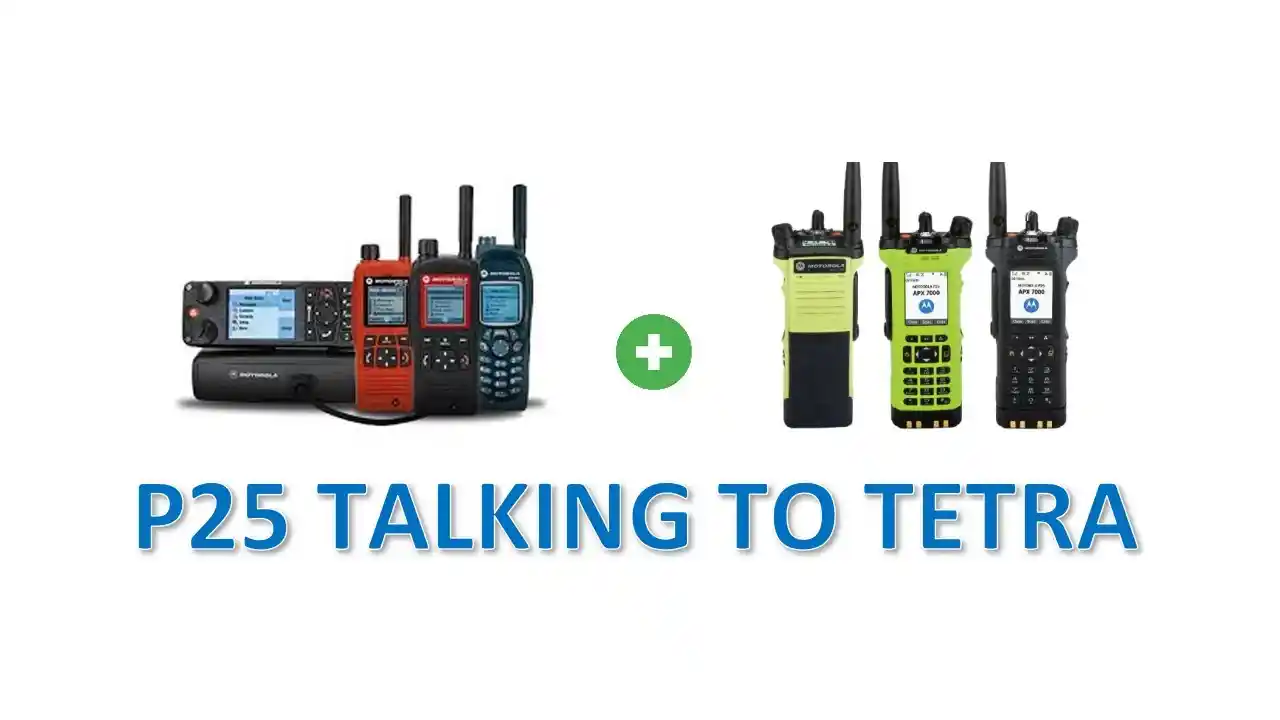
What Is A Motorola Marcs Radio And How Does It Fit Into The APX Ecosystem?
MARCS stands for the Multi-Agency Radio Communication System. It is a massive statewide P25 trunked radio network utilized extensively in Ohio, as well as similar statewide systems across the entire country. It acts as a massive, shared digital highway for public safety communications.
Motorola APX radios are the absolute premier hardware used to access the MARCS network. These radios are rigorously tested and certified by engineers to ensure they can seamlessly roam across the entire state. They automatically connect to the nearest MARCS tower to maintain perfectly clear communication as officers cross county lines.
To operate on MARCS infrastructure, agencies must meet very specific compliance requirements. Their radios must be properly provisioned by authorized dealers with the correct digital encryption keys, specific talkgroup assignments, and unique system IDs.
Why Are Motorola Fire Radios Critical For Fireground Communication?
Firefighters face some of the absolute most hostile communication environments in the world. They must constantly contend with the deafening roar of diesel pump engines, the violent crackle of structural fires, and the physical barriers of thick concrete and steel that aggressively block radio signals.
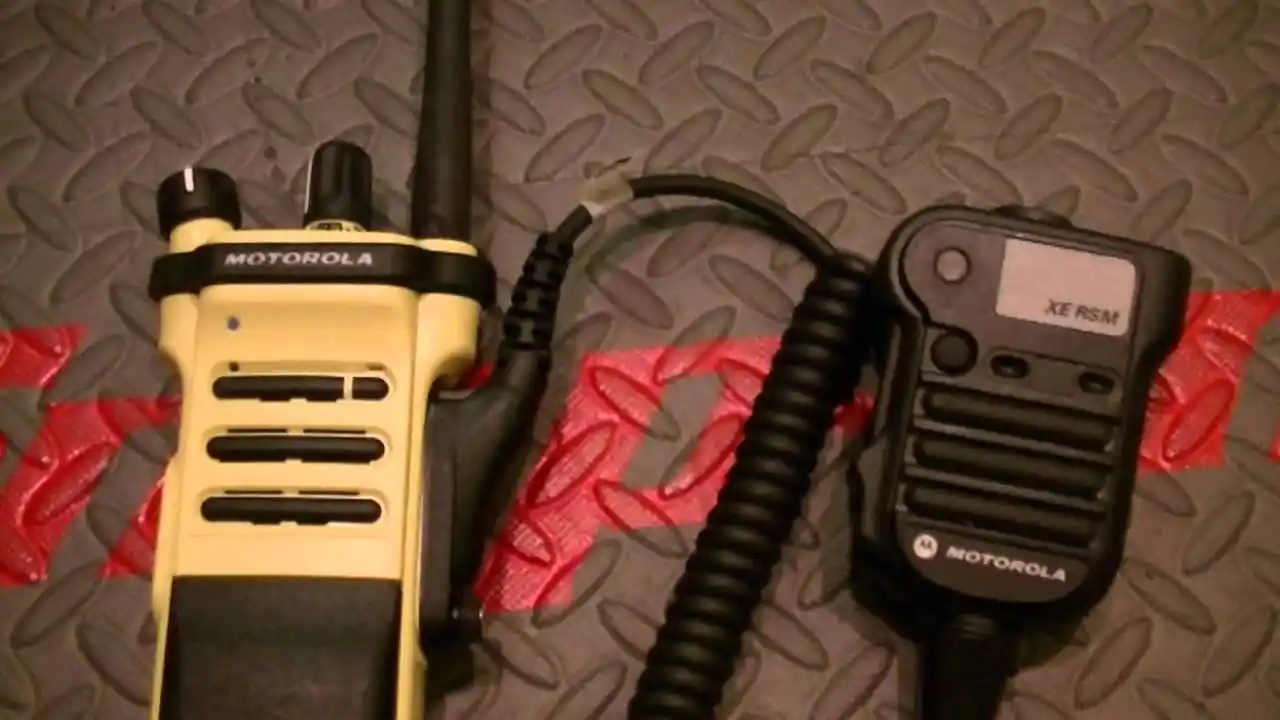
To combat these immense challenges, APX fire radios are equipped with advanced noise-canceling audio that aggressively isolates the human voice from background chaos. They also feature specialized emergency alerts, such as a dedicated, easy-to-find red button that instantly signals a Mayday if a firefighter is trapped, injured, or out of air. Furthermore, they are built with extreme thermal durability to survive intense heat exposure.
Crucially, APX fire radios are heavily engineered to meet strict NFPA guidelines required for safe fireground use. This includes specific intrinsic safety ratings that completely prevent the radio’s internal electronics from sparking and igniting flammable gases in hazardous environments.
What Features Make Motorola Police Radios Ideal For Law Enforcement?
Law enforcement requires a highly unique set of features focused entirely on officer safety, tactical awareness, and absolute operational security. Motorola APX radios are meticulously engineered specifically to meet these high-stakes, life-or-death demands.
A primary feature for police operations is advanced AES-256 digital encryption. This ensures that criminal elements cannot monitor police movements, stakeouts, or tactical plans using cheap internet scanners. APX radios also feature deeply integrated GPS tracking. This allows dispatchers to monitor the exact geographical location of every officer on duty, which is vital for rapid backup deployment. Furthermore, they heavily support covert operation features, such as silent vibration alerts and compatibility with clear acoustic tube earpieces.
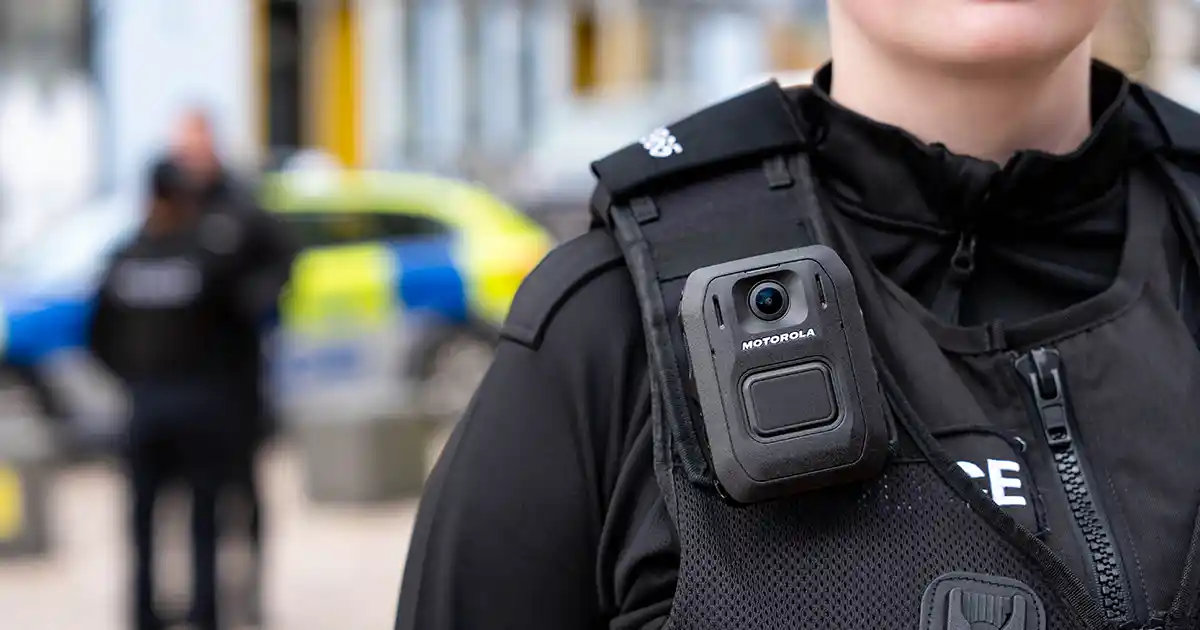
Modern policing also relies heavily on seamless technology integration. APX radios are perfectly designed to integrate smoothly with modern body-worn cameras and advanced computer-aided dispatch systems. This deep integration supports total situational awareness and dramatically improves officer safety while out in the field.
How Do Motorola First Responder Radios Improve Emergency Response Outcomes?
Reliable communication is the absolute foundation of coordinating multi-discipline emergency responses. When police secure a dangerous scene, fire suppresses a chemical hazard, and EMS treats critical patients, they must operate flawlessly as a single, unified team. Motorola APX radios make this possible through shared, interoperable mutual aid channels.
Beyond basic voice communication, these radios feature incredible life-saving automation. Features like Man-Down alerts automatically trigger a deafening emergency signal if the radio’s internal accelerometer detects that an officer or firefighter has fallen and is not moving. Lone Worker modes require periodic manual check-ins, ensuring that personnel working in isolated areas remain accounted for. Priority Interrupt allows an incident commander to instantly override lower-priority chatter to issue critical, life-saving instructions.
The direct connection between APX radio performance and improved operational outcomes is undeniable. When dispatchers can relay clear instructions without static, and when responders can instantly call for help via dedicated emergency buttons, response times drop drastically. The overall safety of both the public and the first responders is significantly enhanced.
Industry benchmark or study showing the exact improvement in response times or reduction in communication errors after upgrading to a P25 digital network.
What Is The Difference Between A Motorola Mobile Radio And A Portable Radio?
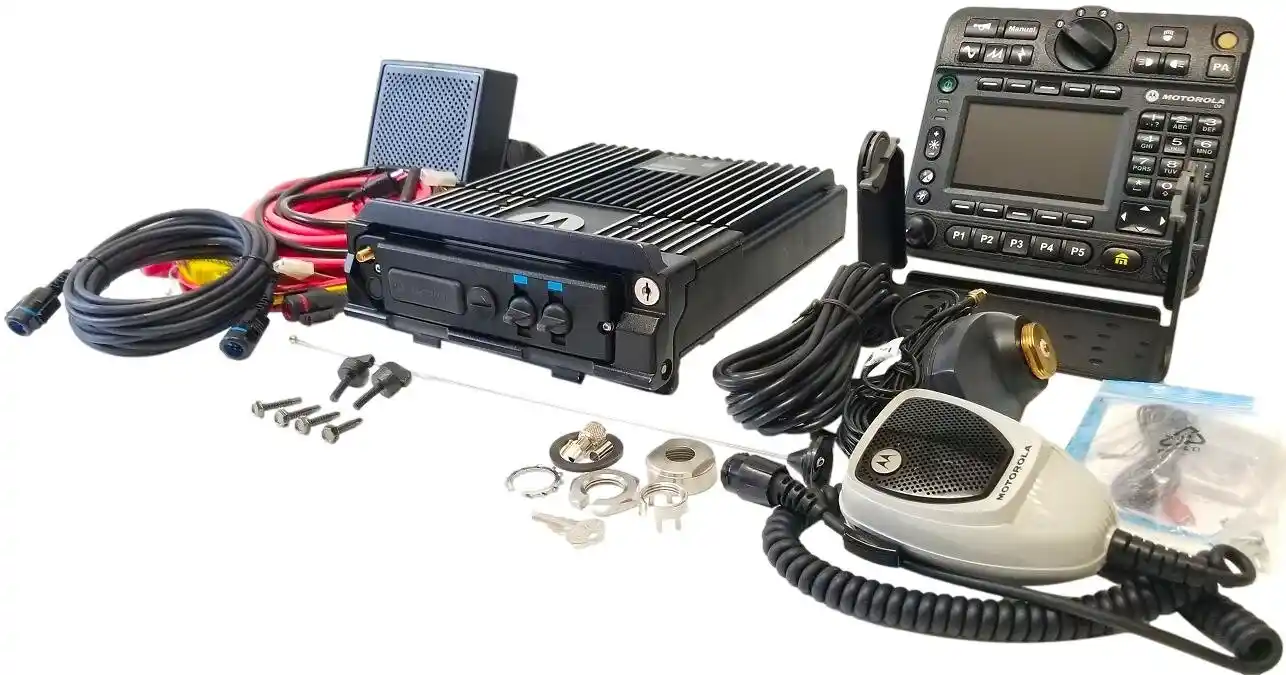
Understanding the distinct differences between equipment form factors is absolutely essential when outfitting a new fleet. Motorola mobile radios are high-power units permanently mounted inside patrol cars, fire engines, or mobile command vehicles. In stark contrast, portable radios are the battery-powered handheld units carried directly on the person.
The main difference lies entirely in power output and communication range. Mobile radios draw continuous power directly from the vehicle’s electrical system, allowing them to transmit at much higher wattages. This gives them a significantly longer communication range and the unique ability to punch through dense urban interference and thick foliage. Portable radios are strictly limited by battery size and federal human safety limits regarding radio frequency exposure, resulting in much lower power and a shorter operational range.
An agency specifically chooses a mobile radio for a patrol car because the vehicle acts as the primary, high-powered base of operations. When an officer is driving at high speeds through varying, mountainous terrain, the high-wattage mobile unit ensures the dispatcher never loses contact. However, the second the officer exits the vehicle, the portable radio takes over. The APX mobile radio lineup includes highly sophisticated dash-mounted units with wired remote microphones, ensuring that vehicle-based communication remains robust and reliable at all times.
Table 3: Environmental Durability Matrix
| Rating Standard | What It Actually Means | Real-World Scenario |
|---|---|---|
| IP68 Rating | Dust tight and water submersion | Radio dropped in a flooded ditch and retrieved |
| MIL-STD 810 | Military shock and vibration test | Radio dropped onto concrete from a 6-foot ladder |
| NFPA 1802 | Intrinsic safety (no sparks) | Radio used inside a methane-filled structural fire |
| MIL-STD 810 (Thermal) | Extreme temperature survival | Radio left in a patrol car during a 110-degree summer |
[Table 4: Portable vs Mobile APX Radios]
| Feature | Portable Radio | Mobile Radio |
|---|---|---|
| Form Factor | Handheld, battery-powered | Vehicle-mounted, hardwired |
| Power Output | Lower (typically 3 to 5 Watts) | Higher (typically 45 to 50 Watts) |
| Primary Use Case | Foot patrol, active fireground | In-vehicle communication, command |
| Communication Range | Shorter, subject to physical barriers | Extended, superior signal penetration |
Are There Common Misspellings That Still Lead To Motorola APX Radios?
When aggressively searching for high-end communication equipment online, users frequently encounter frustrating typos. Common misspellings include “Motorolla APX”, “Motorola AXP radios”, or “Motrola APX series”. Regardless of how you typed your initial search query, you are currently in the absolute right place to learn about genuine, professional-grade Motorola products.
It is highly important to clarify strict brand authenticity when investing taxpayer money in public safety gear. Third-party imitations or refurbished radios purchased from unauthorized sellers can pose severe, life-threatening risks. Genuine Motorola APX products feature highly specific serial number formats, holographic authenticity stickers, and official proprietary firmware that simply cannot be replicated by cheap counterfeit manufacturers. Always purchase directly from authorized Motorola Solutions partners to guarantee full warranty coverage and vital network compliance.
Frequently Asked Questions About Motorola APX Radios
What Are Motorola APX Radios And Who Uses Them?
Motorola APX radios are the flagship line of professional, mission-critical two-way radios built entirely on the P25 digital standard. They are primarily used by front-line first responders, including municipal police officers, structural firefighters, paramedics, and emergency management personnel who absolutely require highly durable, secure, and interoperable communication devices in life-threatening situations.
How Do Motorola P25 Radios Allow Different Agencies To Communicate With Each Other?
Motorola P25 radios use an open, heavily standardized digital protocol that is federally mandated for public safety communications across North America. Because all P25-compliant devices operate on the exact same technological standard, a radio from one local agency can seamlessly connect to the network frequencies and mutual aid talkgroups of neighboring counties or state agencies. This ensures absolutely flawless coordination during joint emergency responses.