
Blog
P25 Radio: Digital System Features And Public Safety Benefits Today
If I need a public safety radio system that is clear, interoperable, and built for long-term support, I start with P25. In this guide, I break down what a p25 radio is, how Phase 1 and Phase 2 differ, which radios fit field use, why costs run high, and what I would verify before buying. I also include comparison tables, a branching quiz, practical checklists, and fact-check notes so the article helps an end-user, not just a spec sheet reader.

Key Takeaways
- P25 is the main digital radio standard for public safety in North America.
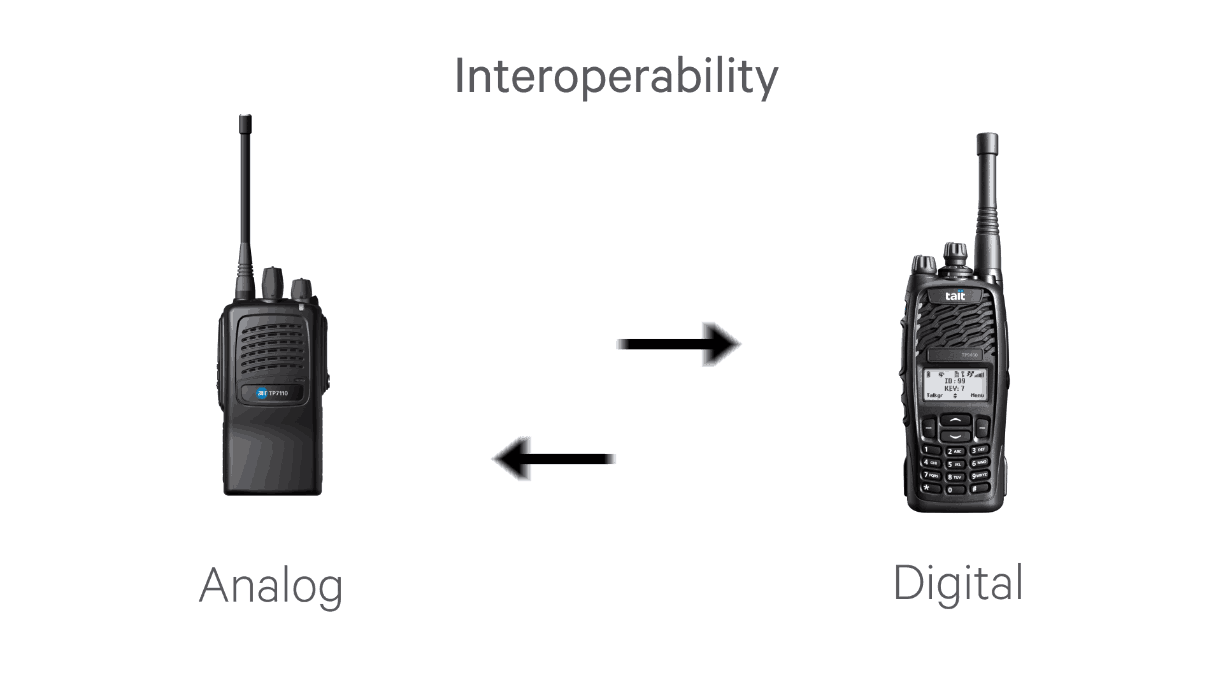
- Interoperability is one of its biggest strengths, especially during mutual aid incidents.
- Phase 2 improves channel efficiency, but not every agency needs to upgrade right away.
- Portable, mobile, and base station radios solve different problems.
- Budget buyers can find lower-cost P25 options, but they should inspect compatibility, licensing, and support carefully.
Table of Contents
P25 Radio
When I explain P25 to an end-user, I keep it simple: a P25 radio is a digital two-way radio designed around Project 25 standards so police, fire, EMS, utilities, transportation teams, and government users can communicate in a more consistent way.
That matters because emergency communications are not just about talking. They are about hearing clearly under stress, staying interoperable across agencies, and protecting sensitive traffic when policy requires it. In North America, P25 became the default public safety choice because agencies wanted a standards-based path instead of being locked into one closed ecosystem.
I also think it helps to frame P25 as a system choice, not just a device choice. A good radio still depends on the network behind it, the way it is programmed, and whether it matches the agency’s mission.
If I were advising a buyer, I would not start with brand hype. I would start with these three questions:
- Who do I need to talk to during a real incident?
- How crowded is my system today?
- Do I need secure traffic and formal standards compliance?
If you want a tailored recommendation, ask for a custom equipment checklist tied to your coverage area, fleet size, and interoperability needs, not just a unit price.
What Is A P25 Radio System And How Does It Work?
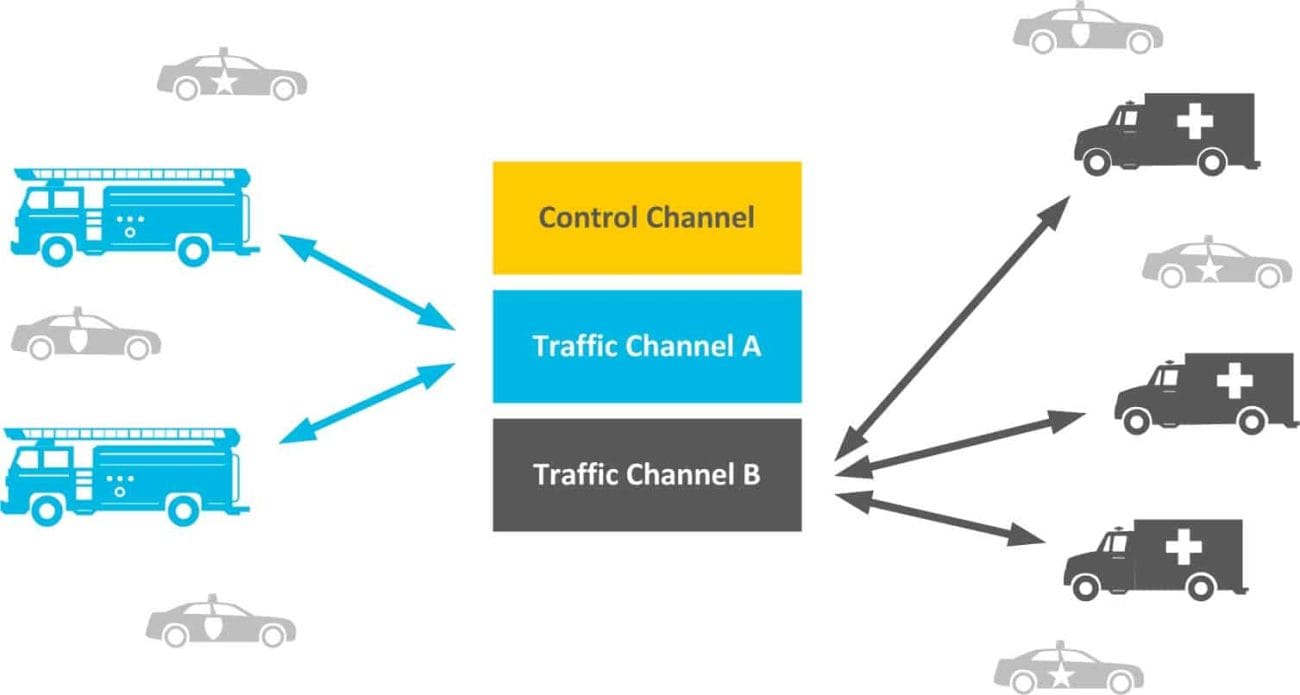
A P25 radio system is a digital radio network that carries voice and, in many cases, data between subscriber radios, repeaters, dispatch consoles, and network controllers. It works by converting speech into digital information, transmitting it over radio channels, and rebuilding it at the receiving radio or console.
Project 25 was developed through work involving APCO, industry partners, and U.S. government stakeholders who needed a common public safety standard. The goal was practical: make mission-critical radio communications easier to standardize, expand, and connect across agencies.
I would separate systems into two broad types:
| System Type | Best Fit | What I Would Expect |
|---|---|---|
| Conventional P25 | Smaller fleets or simpler operations | Fixed channels, less complexity |
| Trunked P25 | Busy or multi-agency systems | Shared channel pool, more efficient traffic handling |
A common mistake is assuming digital always means better coverage. It does not. Coverage still depends on site design, antennas, terrain, building penetration, and programming.
What To Ask Before Buying
- Is my current or target system conventional or trunked?
- Which frequency band do I need?
- Will the radio need encryption, GPS, or over-the-air features?
- Can the vendor confirm system compatibility in writing?
What Are P25 Phase 1 And Phase 2 Trunked Networks?
If I had to reduce this to one sentence, I would say Phase 2 is mainly about better channel efficiency. Phase 1 uses FDMA, while Phase 2 uses TDMA to carry more traffic in the same channel space.
That difference matters most in busy systems. If an agency has rising talkgroup demand, regional growth, or a long refresh cycle ahead, Phase 2 can help it support more users without chasing extra spectrum right away.
| Feature | Phase 1 | Phase 2 |
|---|---|---|
| Access Method | FDMA | TDMA |
| Capacity Profile | Standard digital capacity | Higher channel efficiency |
| Best Fit | Stable or smaller demand | Busier systems needing more voice paths |
I would not tell every agency to jump to Phase 2 immediately. If the current system is stable, fleet compatibility is mixed, and capacity pressure is still manageable, a staged upgrade often makes more sense.
Is Your Radio System Ready For Real Emergencies?
Struggling with unclear audio or poor interoperability during critical moments? Discover how P25 systems solve communication gaps and improve coordination across agencies.
What Are The Key P25 System Interfaces?
These interfaces matter because they shape how open and interoperable a P25 environment really is.
- CAI defines how radios communicate over the air.
- ISSI helps separate P25 systems exchange traffic.
- CSSI helps dispatch consoles connect to the network.
- DFSI supports links involving fixed station functions.
- KFD relates to key fill and encryption handling workflows.
If I were an end-user, I would not memorize every acronym. I would focus on one question: Can my radios, consoles, and neighboring systems work together when the pressure is on?
Plain-English tip: If a vendor says a feature is “standards-based,” ask which interface supports that claim.
What Are The Key Features And Benefits Of P25?
The biggest P25 benefits are interoperability, digital audio, optional encryption, and standards-based long-term support.
For me, interoperability is the real headline. Imagine a wildfire, a large crash, or a countywide storm response. Police, fire, EMS, public works, and neighboring jurisdictions may all need to coordinate fast. P25 is valuable because it gives those groups a stronger shared framework.
P25 can also support data services such as GPS, unit status, and messaging, depending on the network and the radio package. That said, I would not oversell it. P25 is still primarily a mission-critical voice platform.
Coverage Reality Check
- Clearer digital audio does not guarantee better building penetration.
- Poor programming can still hurt user experience.
- Edge-of-coverage behavior should be tested in the places your people actually work.
Field Demo Scorecard
- Audio in heavy background noise
- Emergency button access
- Display readability in sunlight
- Glove-friendly controls
- Speaker mic performance
- Battery runtime on a full shift
What Are The Technical Specifications Of P25?
I look at P25 as a suite of standards, not one single specification. That matters because buyers often think “P25 compliant” answers everything. It does not. A radio can support the standard and still differ in ergonomics, options, lifecycle support, or interoperability performance across a real deployment.
The open-interface model is one of the strongest reasons agencies choose P25. It gives procurement teams a more structured way to evaluate multi-vendor options and reduce long-term lock-in risk.
Outside North America, buyers may compare P25 with other standards more often. In North America, though, public safety planning still treats P25 as the central reference point for land mobile radio.
What Types Of P25 Radios Are Available?
I group P25 radios into portable, mobile, and base station models. Each one fits a different job.
| Form Factor | Best Use | Main Strength | Main Watchout |
|---|---|---|---|
| Portable | Frontline personnel | Mobility | Battery and accessory fit |
| Mobile | Vehicle installs | Higher power and better antenna setup | Installation complexity |
| Base Station | Fixed sites or dispatch points | Stable local communications point | Site planning needs |
A portable radio is what I would expect on a firefighter, patrol officer, medic, or field supervisor. A mobile radio fits a patrol car, engine, utility truck, or command vehicle. A base station is the fixed anchor point.
What End-Users Often Miss
- A great portable can still disappoint if the speaker mic, battery, or carry setup is wrong.
- A mobile install is only as good as its antenna placement and vehicle power integration.
What Are Apx P25 Portable Radios And Who Uses Them?
When people ask me about APX radios, they are usually asking about Motorola’s high-profile P25 portable line for public safety. These radios are common in police, fire, EMS, and government fleets because buyers often value rugged build quality, accessory depth, and long-term ecosystem support.
Models such as the Motorola APX 6000 are frequently discussed, but I would never publish exact feature claims without checking the model sheet, firmware, and band split first.
Fact-Check Note: Model capabilities vary by configuration.
Are There Affordable P25 Radios Available For Smaller Agencies?
Yes, but I would define “affordable” carefully. Lower-cost P25 options may include single-band models, older fleets, or certified pre-owned units. They can work well if they fit the system and come from a trustworthy source.
The tradeoff is usually not one big missing feature. It is several smaller ones. You may see less flexibility in multiband use, fewer advanced features, shorter warranty terms, or older accessory ecosystems.
Used Or Certified Pre-Owned Questionnaire
- Is the radio confirmed for my exact system?
- Are the feature licenses present and transferable?
- Is the battery new, tested, or unknown?
- Is encryption supported, and if so, which method?
- Has the unit been field tested after programming?
A hobby scanner is not the same as a compliant subscriber radio. If I were buying for an agency, I would treat that distinction as non-negotiable.
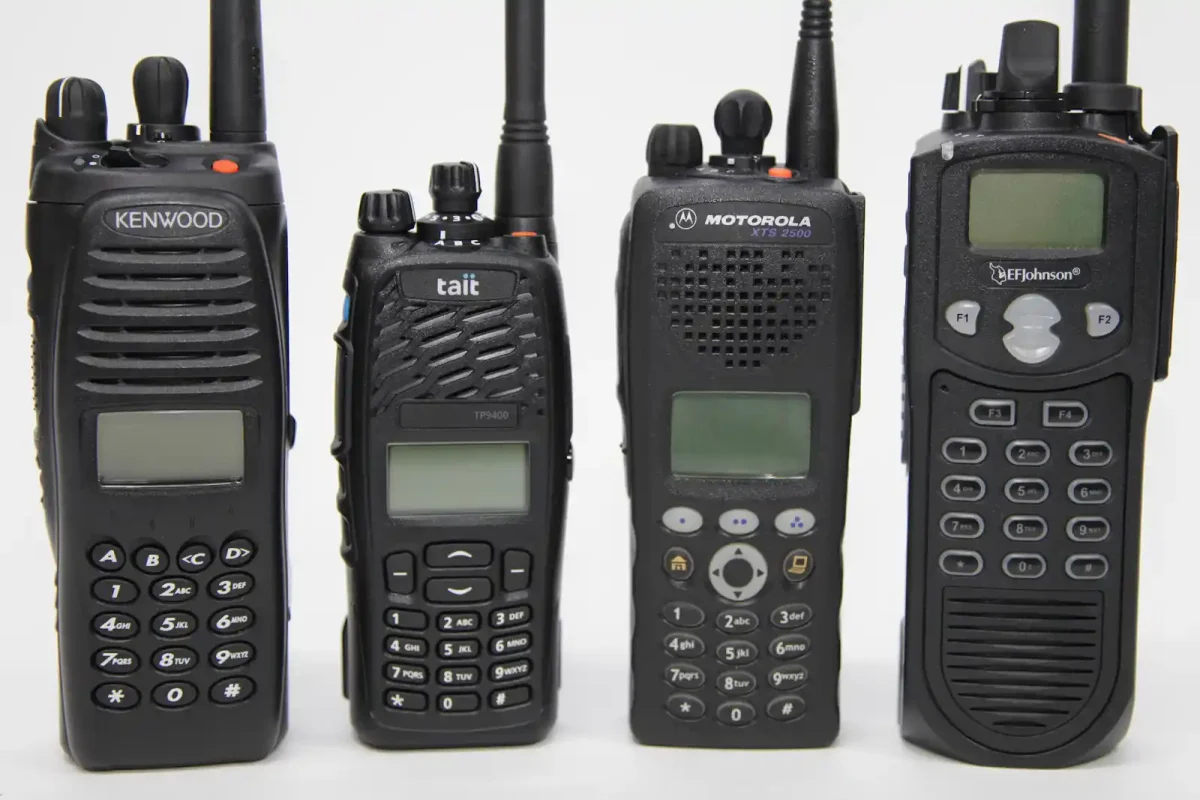
What Are Motorola Fire And Police P25 Radios Used For?
I think the clearest way to explain this is by environment. Fire service radios are built for heat, water, impact, loud scenes, and glove use. Police radios often emphasize secure traffic, discreet alerts, surveillance accessories, and patrol ergonomics.
If I were spec’ing radios for fire operations, I would care more about large controls, loud audio, and scene durability. If I were spec’ing for police, I would focus more on encrypted routine traffic, concealment options, and fast talkgroup access.
That is why one radio line can serve both fields, but the priority settings and accessory choices may differ a lot.
[Testimonial Placeholder: Field user feedback comparing radio priorities for fireground and patrol use]
What Is The P25 Compliance Assessment Program?
P25 CAP is important because it gives buyers a way to check whether equipment has been evaluated against published P25 expectations. I see it as a procurement confidence tool, not just a certification phrase.
If federal or homeland security funding is in the picture, I would also verify current grant language before assuming eligibility. Some programs care deeply about standards and testing, but the exact requirement can vary.
Procurement Checklist
- Identify the target system and compatibility needs
- Request compliance documentation
- Confirm encryption and key management requirements
- Review any grant conditions before final approval
Are P25 Radios Encrypted And How Secure Are They?
Yes, many P25 radios support encryption, but security is not the same as having an encryption menu item. It depends on the algorithm, key handling, programming discipline, and lost-radio response process.
In current public safety procurement, AES-based approaches are commonly favored where stronger standards-based protection is required. Older or weaker methods may still exist in legacy environments, but I would not assume they meet current policy or risk expectations.
Security Is More Than Encryption
- Use a strong, policy-approved algorithm
- Control who loads and stores keys
- Rekey on schedule
- Disable or respond quickly to lost units
- Train users not to rely on secure channels casually
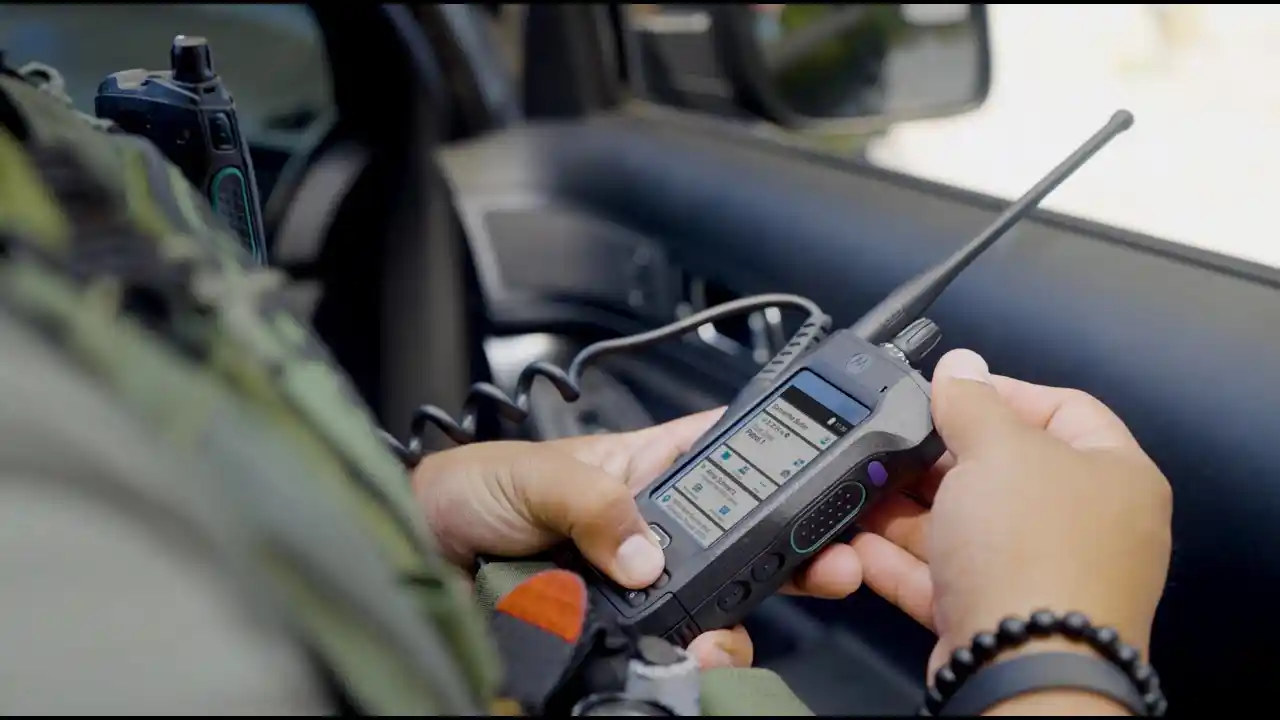
How Does P25 Compare To Dmr And Tetra?
I would frame this as a fit question, not a winner question.
| Standard | Best Fit | Main Strength | Main Limitation |
|---|---|---|---|
| P25 | North American public safety | Interoperability and public safety alignment | Higher cost |
| DMR | Business, utility, budget-focused fleets | Lower entry cost in many cases | Less aligned with U.S. public safety mutual aid |
| TETRA | Markets where TETRA is established | Strong fit in certain regions | Less common in North American public safety |
Branching Quiz
Do I need to interoperate with North American public safety partners?
- Yes: Start with P25.
- No: Go to question 2.
Is my top priority lowering entry cost for a business or utility fleet?
- Yes: Look at DMR.
- No: Go to question 3.
Am I in a region where public safety infrastructure already favors TETRA?
- Yes: Explore TETRA.
- No: Go to question 4.
Do I expect grant-driven procurement and long-term mutual aid planning?
- Yes: P25 is usually the stronger path.
- No: Compare system goals, not just radio price.
Why Are P25 Radios So Expensive And What Equipment Is Needed?
P25 radios cost more because buyers are not just paying for a handset. They are paying for ruggedization, standards work, compliance testing, secure features, long support life, and mission-critical reliability.
I would also remind readers to think beyond subscriber radios. A real P25 environment can involve:
- Portable and mobile radios
- Repeaters or site equipment
- Controllers
- Dispatch consoles
- Antennas and power systems
- Programming and key management tools
- Accessories, batteries, and spares
Common Mistakes To Avoid
- Pricing only the radio, not the full system
- Ignoring batteries, chargers, and speaker mics
- Buying used units without feature verification
- Assuming all encryption options are equal
If you are budgeting a migration or expansion, ask for a custom equipment checklist, a compatibility review, and a phased rollout plan.
Is P25 Still Relevant And What Does The Future Hold?
Yes. I still see P25 as the core mission-critical voice standard for many public safety agencies. Broadband services such as FirstNet and LTE tools add major value, but they usually complement P25 rather than replace it outright.
The future is not really P25 versus broadband. It is P25 plus broadband, with each handling what it does best. P25 remains essential for direct, resilient radio voice. Broadband brings apps, data workflows, mapping, and other high-bandwidth functions.
Future-Proofing Questions
- Will my next radio fleet support my current system for its full lifecycle?
- Do I need better interoperability today, or just better apps?
- Can I phase upgrades instead of replacing everything at once?
Frequently Asked Questions About P25 Radio
What Is A P25 Radio And Why Do Emergency Services Use It?
A P25 radio is a standards-based digital two-way radio used by police, fire, EMS, and government teams. Emergency services use it because it supports clear voice, interoperability, and secure communications options across agencies and jurisdictions.
How Does P25 Compare To DMR And TETRA For Public Safety?
For North American public safety, I usually see P25 as the strongest fit when mutual aid, standards alignment, and long-term interoperability matter most. DMR can make sense for budget-sensitive or commercial use, while TETRA is often more relevant in regions where that ecosystem is already established.