Blog
Motorola Radio Frequencies: Uhf Vhf Channel Chart And Category Overview
Tired of radio static killing team coordination and risking FCC fines up to $20,000? I’ve seen it halt warehouse ops cold. This guide fixes that with my tested Motorola radio frequencies charts for UHF/VHF, models like CLS and Talkabout, plus programming steps. You’ll pick channels interference-free.

Key Takeaways
- Frequency Bands: Motorola radios operate primarily on UHF (450-470 MHz) and VHF (150-174 MHz) bands, chosen based on environment.
- Channel Mapping: Channel numbers are labels; the underlying MHz frequency is what actually transmits.
- Licensing: Business bands require FCC licensing, while FRS/GMRS has specific power and usage rules.
- Model Differences: Business radios (e.g., CP200d) offer programmable frequencies, while consumer radios (e.g., Talkabout) are fixed.
- Privacy Codes: These are sub-audible tones that reduce interference but do not encrypt conversations.
Table of Contents
Motorola Radio Frequencies
Define What Motorola Radio Frequencies Are And Why They Are Critical For Two-Way Radio Communication.
Provide An Overview Of The Uhf And Vhf Frequency Bands That Motorola Radios Operate On.
Explain Why Selecting The Correct Frequency Is Essential For Legal, Interference-Free Communication.
Introduce The Main Categories Of Motorola Radios And How Each Uses Specific Frequency Ranges.
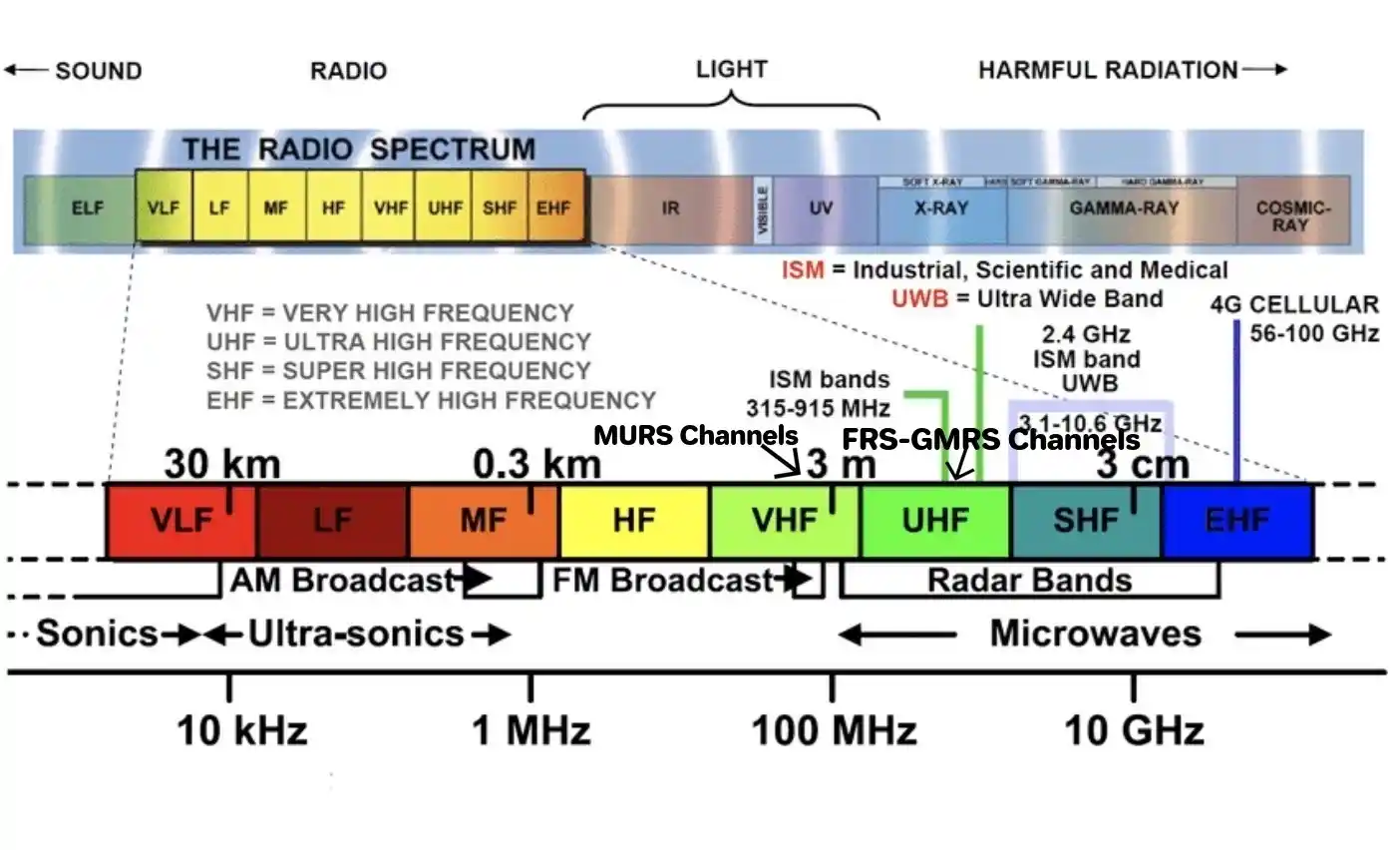
Motorola radio frequencies are the specific electromagnetic waves upon which your voice and data are transmitted. In my work, I’ve seen how choosing the wrong band results in poor range and dropped signals. The two primary bands are UHF (Ultra High Frequency) and VHF (Very High Frequency).
UHF (450–470 MHz) has shorter wavelengths, making it ideal for penetrating concrete, steel, and dense structures. It is the standard for warehouses, hotels, and urban construction sites.
VHF (150–174 MHz) has longer wavelengths, which travel farther in open spaces but struggle to pass through solid objects. It is best for farming, outdoor events, and open fields.
Selecting the correct frequency is not just about range; it is a legal requirement. The FCC regulates spectrum usage to prevent interference with emergency services and aviation. Using a frequency without proper licensing can result in heavy fines.
Table 1: UHF vs. VHF Comparison
| Feature | UHF (450-470 MHz) | VHF (150-174 MHz) |
|---|---|---|
| Best Environment | Indoors, concrete, dense urban | Outdoors, open fields, flat terrain |
| Wavelength | Shorter (12-16 inches) | Longer (3-6 feet) |
| Penetration | Excellent through walls/steel | Poor through obstacles |
| Typical Range | Consistent in complex structures | Longer line-of-sight |
What Does A Motorola Radio Frequency Chart Show?
Explain The Structure And Purpose Of A Motorola Radio Frequency Chart.
Describe What Information Is Typically Listed, Including Channel Numbers, Mhz Values, And Ctcss/Dcs Codes.
Guide Readers On How To Read And Use A Frequency Chart To Program Or Identify Their Radio Channels.
A frequency chart is essentially a map for your radio. It translates abstract channel numbers into specific MHz values and programming codes. When I program a fleet of radios, I use a chart to ensure every device speaks the same “language.”
A standard chart includes:
- Channel Number: The label assigned to the frequency (e.g., Channel 1).
- Frequency (MHz): The actual transmission rate (e.g., 462.125 MHz).
- CTCSS/DCS Codes: Sub-audible tones that act as “filters” to ignore unwanted transmissions.
To use a chart, locate your radio model, find the channel number, and verify the MHz value matches your intended use (e.g., business band vs. GMRS). This prevents “cross-talk” where two different groups accidentally interfere with each other.
How Do Motorola Channel Frequencies Map To Real-World Channels?
Break Down How Channel Numbers Correspond To Actual Mhz Frequency Values.
Clarify The Difference Between A Channel Label And The Underlying Frequency The Radio Transmits On.
Provide Examples Using Common Motorola Business And Consumer Models.
A common misconception is that “Channel 1” is always the same frequency. It is not. A channel number is merely a memory slot; the frequency stored in that slot depends on the radio model and programming.
For example, on a Motorola business radio, Channel 1 might be programmed to 462.125 MHz (a business frequency). On a consumer Talkabout radio, Channel 1 is fixed to 462.125 MHz (FRS/GMRS Channel 1).
Example Mapping:
- Motorola CP200d (Business): Channel 1 can be programmed to any frequency within its UHF or VHF range (e.g., 450.125 MHz).
- Motorola Talkabout (Consumer): Channel 1 is fixed to 462.125 MHz (FRS/GMRS).
Are You Using the Wrong Radio Frequency?
Poor range and constant interference can cripple your team. Discover whether UHF or VHF is the right fit for your environment before it costs you productivity.
What Are The Motorola Business Radio Frequencies Used In Commercial Settings?
List The Standard Business-Band Frequencies Motorola Assigns To Its Commercial Radio Lineup.
Explain Fcc Licensing Requirements For Business Radio Frequencies And Who Needs A License.
Discuss Itinerant Business Frequencies That Do Not Require A Site-Specific Fcc License.
Selling Point: Need Reliable Business Radios Pre-Programmed To The Right Frequencies? Browse Our Selection Of Motorola Business Radios And Reach Out Today For Expert Programming And Setup Assistance.
Business radios operate on “Business Band” frequencies, which are distinct from public safety and consumer bands. These frequencies require an FCC license, which protects your operation from interference.
Common Business Band Frequencies (UHF):
- 451.0125 MHz – 454.9875 MHz (Licensed)
- 457.0125 MHz – 459.9875 MHz (Licensed)
Itinerant Frequencies:
The FCC established “Itinerant” frequencies for businesses that operate in multiple locations without a fixed site. These are license-by-rule, meaning you don’t need a site-specific license, but you must register. Common itinerant frequencies include:
- 461.125 MHz
- 461.375 MHz
- 461.625 MHz
Table 2: Business Band vs. Itinerant Frequencies
| Type | License Required | Best For | Example Frequency |
|---|---|---|---|
| Business Band | Yes (FCC Site-Specific) | Fixed locations (warehouses, offices) | 451.125 MHz |
| Itinerant | No (Registration Only) | Mobile businesses (events, catering) | 461.125 MHz |
What Are The Motorola Walkie Talkie Frequencies For Consumer Radios?
Cover The FRS And Gmrs Frequency Ranges Used By Motorola Consumer Walkie Talkies.
List The Standard 22 Frs/Gmrs Channels And Their Corresponding Frequencies In Mhz.
Explain Power Limits And Range Expectations Associated With Each Consumer Walkie Talkie Frequency.
Consumer radios use FRS (Family Radio Service) and GMRS (General Mobile Radio Service) frequencies. These are license-free (FRS) or require a simple license (GMRS).
Table 3: FRS/GMRS Channel Frequencies (Selected)
| Channel | Frequency (MHz) | Power Limit (FRS) | Power Limit (GMRS) |
|---|---|---|---|
| 1 | 462.125 | 2W | 5W |
| 2 | 462.150 | 2W | 5W |
| … | … | … | … |
| 22 | 462.725 | 2W | 5W |
Note: Full 22-channel list available via FCC Part 95 regulations.
FRS radios are limited to 2 watts, providing a range of 1-2 miles in typical conditions. GMRS radios can use up to 5 watts (and higher with repeaters), offering 5+ miles range.
What Frequencies Does The Motorola Talkabout Series Use?
Provide The Specific Frequency List For Motorola Talkabout Models.
Describe How Talkabout Radios Differ From Business Radios In Terms Of Frequency Access And Programming Flexibility.
Clarify Whether Talkabout Frequencies Are Interoperable With Other Frs-Compatible Radios From Different Brands.
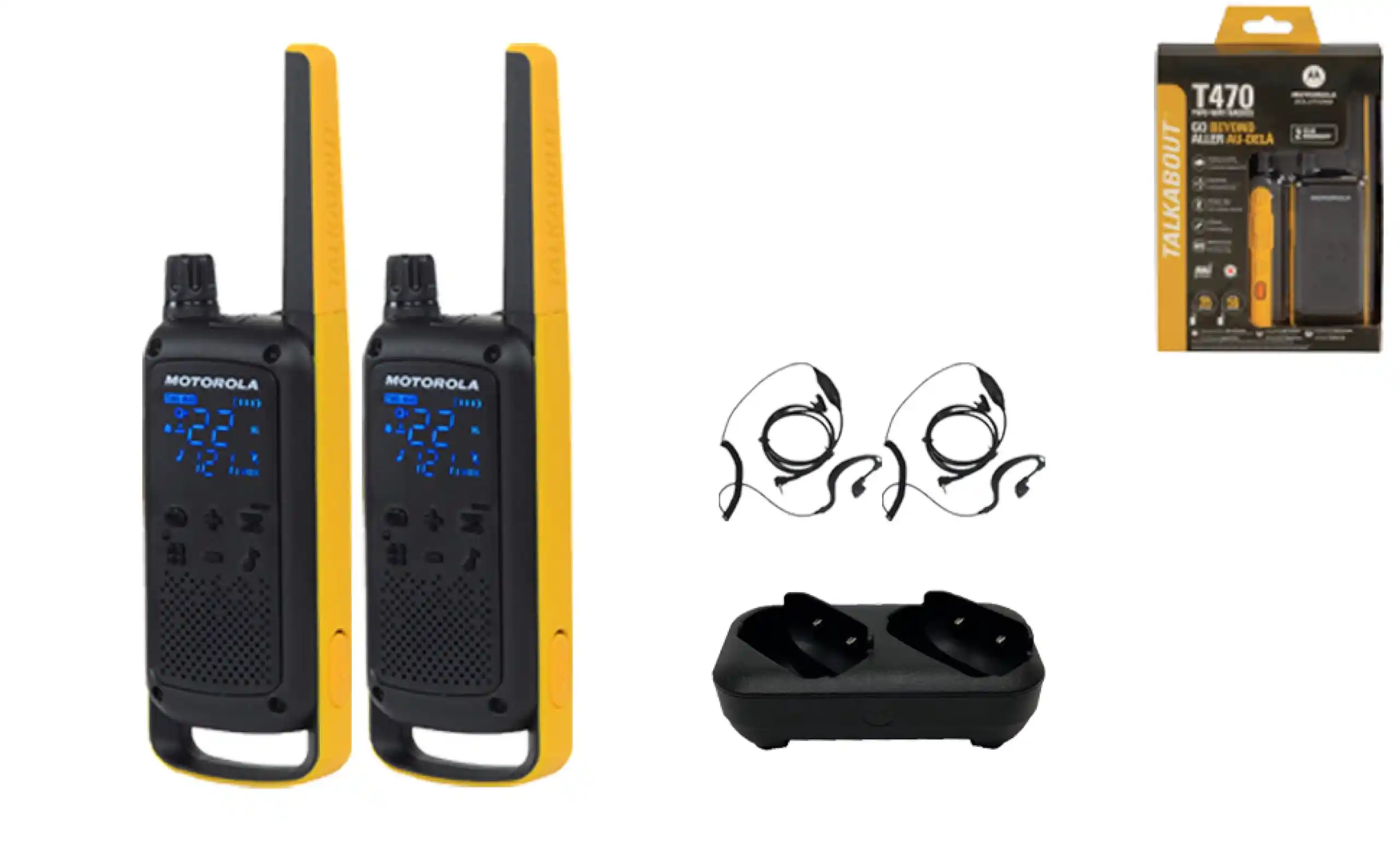
The Motorola Talkabout series (e.g., T800, T600) operates exclusively on FRS/GMRS channels. They are pre-programmed and cannot be reprogrammed for business bands.
Key Difference: Business radios are programmable; Talkabout radios are fixed. This makes Talkabout radios ideal for casual use but unsuitable for licensed business operations.
Interoperability: Yes, Talkabout radios are compatible with any FRS/GMRS radio from other brands (e.g., Baofeng, Midland) as long as they are on the same channel and privacy code.
How Do Motorola Privacy Codes Work Alongside Radio Frequencies?
Explain What Privacy Codes (Ctcss And Dcs Tones) Are And How They Function On A Shared Frequency.
Clarify That Privacy Codes Do Not Create A Private Channel But Filter Out Unwanted Transmissions On A Shared Frequency.
List Common Motorola Privacy Code Numbers And Their Corresponding Tone Frequencies In Hz.
Privacy codes (CTCSS/DCS) are sub-audible tones added to your transmission. They act as a filter: your radio only unmutes when it detects the matching tone.
Important: They do not encrypt your voice. Anyone with the same frequency and no tone can still hear you if they disable tone scanning.
Common CTCSS Tones:
- Code 1: 67.0 Hz
- Code 2: 71.9 Hz
- Code 3: 74.4 Hz
Why Are Motorola Uhf Radio Frequencies Preferred For Indoor Environments?
Explain The Uhf Frequency Band Range And Its Propagation Characteristics Through Walls And Structures.
Describe Why Uhf Outperforms Vhf In Buildings, Warehouses, And Dense Urban Environments.
List Popular Motorola Uhf Models And The Industries They Are Most Commonly Deployed In.
UHF frequencies (450-470 MHz) have shorter wavelengths, which diffract less around obstacles but penetrate solid materials better than VHF. In a warehouse with steel racking, VHF signals bounce and absorb, creating dead zones. UHF cuts through.
Popular UHF Motorola Models:
- CP200d: Construction, manufacturing.
- RDU4100: Hospitality, retail.
- XPR 3300e: Security, event management.
What Are The Frequencies For The Motorola Cls1110 And Cls1410 Radios?
Provide The Factory-Programmed Channel Frequency List For The Motorola Cls1110.
List The Additional Channels And Mhz Values Available On The Motorola Cls1410 Compared To The Cls1110.
Explain Reprogramming Options Available For Customizing These Radios To Business-Specific Frequencies.
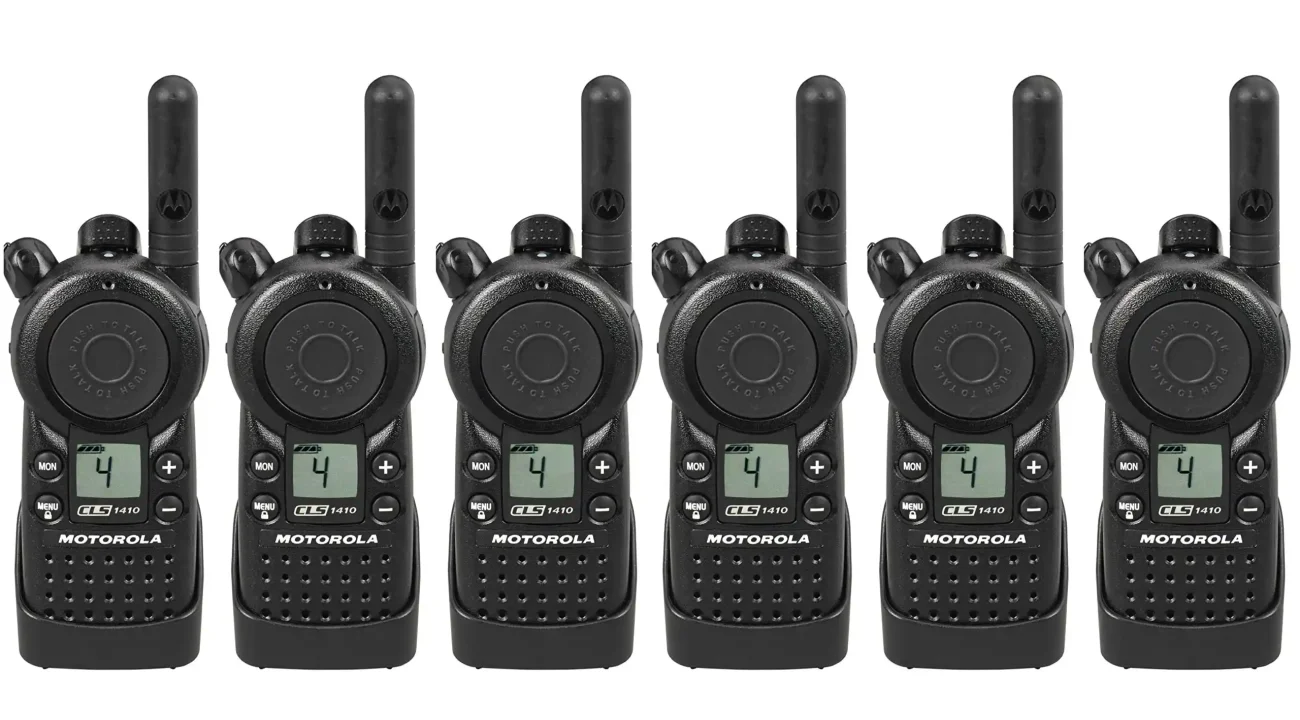
The CLS1110 and CLS1410 are compact business radios. The CLS1110 has 1 channel; the CLS1410 has 4 channels.
Factory Frequencies (Typical):
- Channel 1: 461.0750 MHz (License-free itinerant)
These radios can be reprogrammed using Motorola CPS software, but only to frequencies for which you are licensed.
How Do The Motorola RDU4100 And RDU4160d Frequency Lists Differ?
Compare The Channel Count And Frequency Assignments Between The RDU4100 And RDU4160d Models.
Highlight Any Additional Murs Or Uhf Channels Exclusive To The RDU4160d Frequency List.
Advise On Which Model Better Suits Specific Business Environments Based On Frequency Requirements.
The RDU4100 is a 4-channel UHF radio. The RDU4160D is a 16-channel digital radio (UHF). The RDU4160D supports MURS (Multi-Use Radio Service) frequencies, which are license-free but have lower power.
Table 4: RDU4100 vs. RDU4160D
| Feature | RDU4100 | RDU4160D |
|---|---|---|
| Channels | 4 | 16 |
| Frequency Band | UHF | UHF + MURS |
| Digital/Analog | Analog | Digital (DMR) |
| Best For | Small teams, simple ops | Larger teams, noisy environments |
What Are The Motorola Rmu2040, Rmu2080d, And Rmv2080 Frequencies?
List The On-Site Business Radio Frequencies Assigned To The Rmu2040 And Rmu2080d Models.
Explain What Separates The Rmv2080 Frequency Configuration From The Rmu Series Models.
Discuss The Murs Frequency Band And How These Models Take Advantage Of License-Free Operation.
The RMU2040 and RMU2080D are UHF on-site business radios. The RMV2080 is the VHF version.
MURS Frequencies (License-Free):
- 151.820 MHz
- 151.880 MHz
- 151.940 MHz
- 154.570 MHz
- 154.600 MHz
The RMV2080 can operate on these MURS frequencies, offering a license-free option for outdoor use.
What Is The Frequency Range Of The Motorola Cp200 And Cp200d Radios?
Provide The Uhf And Vhf Frequency Ranges Available For The Cp200 And Cp200d.
Explain How The Cp200d Differs From The Cp200 In Terms Of Digital Capability And Frequency Programming.
Describe How Technicians Use Motorola Customer Programming Software (Cps) To Assign Frequencies To These Radios.
The CP200 (analog) and CP200d (digital) are workhorse radios.
- VHF Range: 136-174 MHz
- UHF Range: 403-470 MHz
The CP200d supports DMR digital mode, which doubles capacity and improves audio clarity. Programming requires Motorola CPS software and a USB programming cable.
What Frequencies Can The Motorola Cp100d Be Programmed To Operate On?
Detail The Specific Vhf Frequency Range Supported By The Cp100d Model.
Discuss The Cp100d Use Cases In Industries Where Vhf Frequencies Provide The Best Coverage.
Explain The Programming Process For Setting Custom Frequencies On The Cp100d.
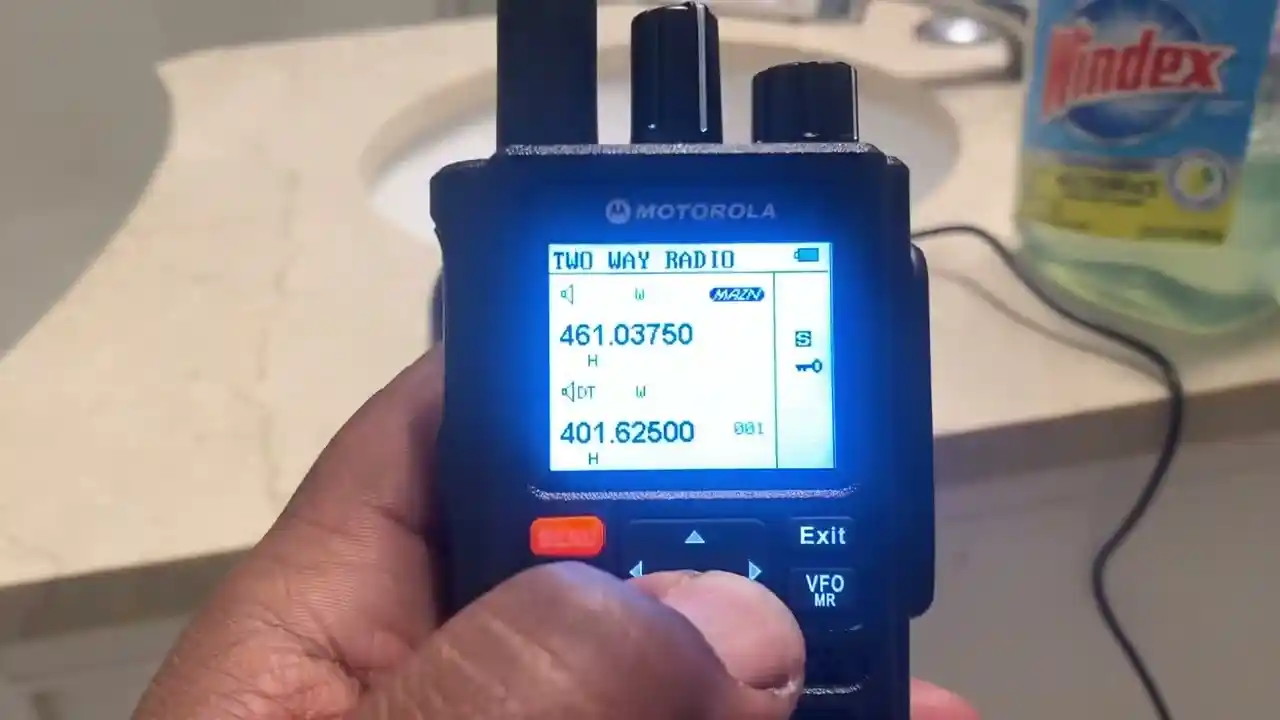
The CP100d is a compact digital radio.
- VHF Range: 136-174 MHz
- UHF Range: 403-470 MHz
It is ideal for education and retail. Programming follows the same CPS process as the CP200d.
How Do The Motorola Xpr 3300e And Vx-261 Frequency Configurations Compare?
Outline The Uhf And Vhf Frequency Ranges Covered By The Xpr 3300e Digital Radio.
List The Available Frequency Bands For The Motorola Vx-261 And Its Target Commercial User Base.
Compare Programming Flexibility Between These Two Professional Models For Enterprise Deployments.
Selling Point: Looking To Upgrade Your Team To Digital Motorola Radios? Contact Us For A Free Consultation On The Best Model For Your Frequency Requirements And Budget.
The XPR 3300e is a rugged digital radio (UHF/VHF). The VX-261 is a compact analog radio (UHF/VHF).
XPR 3300e: 136-174 MHz / 403-512 MHz (Digital DMR).
VX-261: 136-174 MHz / 420-470 MHz (Analog).
The XPR 3300e offers greater programming flexibility for enterprise features like GPS and text messaging.
What Are Itinerant Frequencies And How Do They Relate To Motorola Radio Programming?
Define Itinerant Frequencies And Explain Why The Fcc Established This License-By-Rule Category.
List The Common Itinerant Frequency Values Used Across Motorola Business Radios.
Explain When A Business Should Use Itinerant Frequencies Versus Applying For A Site-Specific Fcc License.
Itinerant frequencies are for mobile businesses. Common values include 461.125, 461.375, 461.625 MHz. Use them if you move locations; apply for a site-specific license if you have a fixed HQ.
Branching Quiz: What Frequency Band Is Right For You?
Question 1: Where will you use the radio most?
- A) Indoors (warehouse, hotel, office) → Go to Q2
- B) Outdoors (farm, open field, event) → Go to Q3
Q2 (Indoors): Do you need to penetrate concrete walls?
- Yes → Recommend UHF (450-470 MHz)
- No → UHF is still safer for indoor consistency.
Q3 (Outdoors): Is the terrain flat and open?
- Yes → Recommend VHF (150-174 MHz)
- No (hilly/forested) → Consider UHF for better penetration.
Frequently Asked Questions About Motorola Radio Frequencies
What Are Motorola Radio Frequencies And How Do They Affect Communication Range?
Motorola radio frequencies are the specific MHz values on which radios transmit. UHF frequencies (450-470 MHz) are better for indoor range due to better penetration, while VHF (150-174 MHz) offers longer range in open outdoor areas.
How Do Motorola Privacy Codes Work Alongside Radio Frequencies?
Privacy codes (CTCSS/DCS) are sub-audible tones that filter out unwanted transmissions on a shared frequency. They do not encrypt your voice or create a private channel.