
Blog
Types Of Radios: Am Fm Two-Way And Communication Categories Today
I have spent over twelve years testing and deploying radios for everything from weekend hikers to large construction crews. In that time I have learned one clear truth: choosing the wrong type of radio creates frustration and sometimes real danger. This guide walks you through every major category so you can select the right equipment with confidence.

Key Takeaways
- Understanding the difference between AM, FM, and two-way radios prevents costly mistakes.
- Licensing requirements and frequency bands dramatically affect range and legal use.
- Professional radios offer features that justify their higher price in critical situations.
- Even in 2025, radios remain more reliable than smartphones when infrastructure fails.
Table of Contents
Types Of Radios
Radios are more than just entertainment boxes; they are wireless transceivers that transmit and receive information via electromagnetic waves. In my experience, most people categorize radios as either “the thing in my car” or “a walkie-talkie,” but the reality is a vast spectrum of specialized tools. Today, radios range from analog receivers to Digital Mobile Radio (DMR) systems that integrate with internet protocols to provide global reach.
The evolution of these devices has been staggering. We have moved from the spark-gap transmitters of the early 1900s to Software Defined Radio (SDR), where a single computer chip can process almost any frequency. This evolution matters because it has lowered the barrier to entry for professionals. Industries like logistics, hospitality, and emergency services now use radios that are smaller, clearer, and more “intelligent” than ever before.
For you as a consumer or business owner, understanding these categories is vital. Using the wrong device can lead to signal interference or even legal repercussions from the FCC. Whether you are a hobbyist looking for a new pastime or a manager needing to coordinate 50 employees, the following sections will clarify exactly which “type” of radio fits your world.
How Do Radios Work?
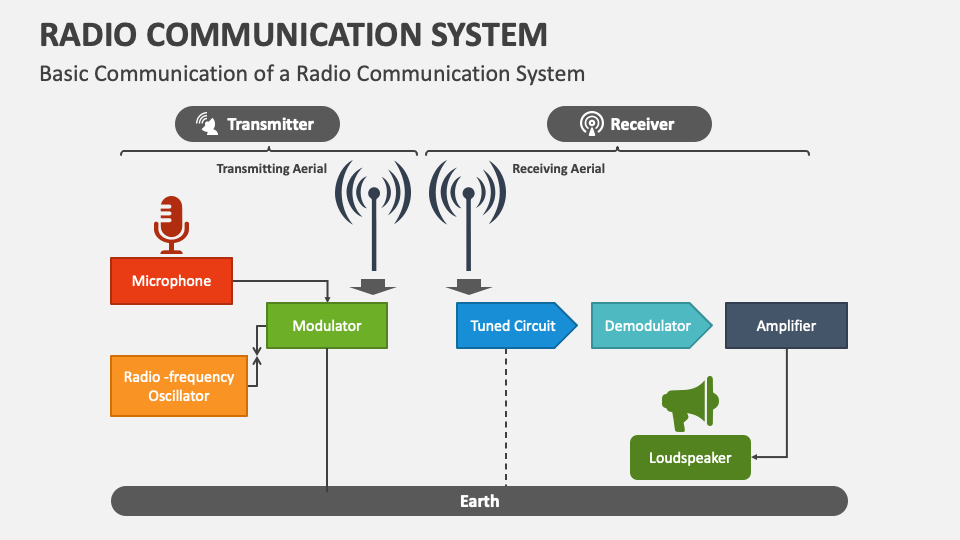
Radio technology relies on three main components: a transmitter, an antenna, and a receiver. The transmitter generates a carrier wave, the antenna radiates it into the air, and the receiver picks it up and converts it back into audio.
Modulation Techniques
The way information is “piggybacked” onto the carrier wave defines the type of signal:
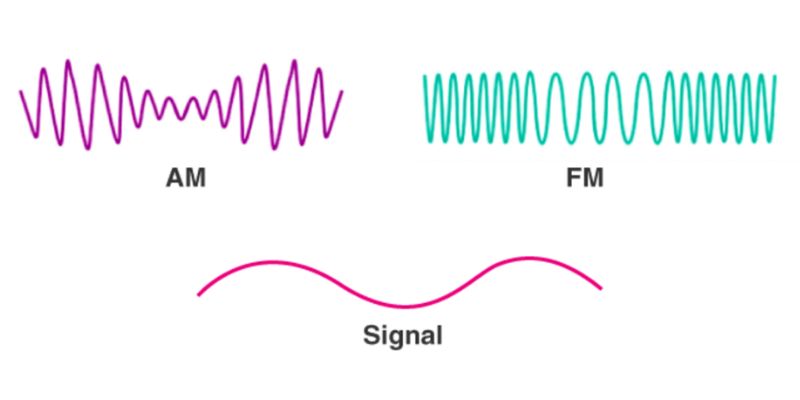
- AM (Amplitude Modulation): The height of the wave is varied. This allows the signal to travel long distances, especially at night, but it is very susceptible to electrical noise (static).
- FM (Frequency Modulation): The frequency of the wave is varied. This results in superior audio clarity and resistance to static, but it requires a “line-of-sight” path between the sender and receiver.
The Role of Frequency Bands
Frequency is measured in Hertz (Hz). Lower frequencies (like AM) can hug the earth or bounce off the sky, while higher frequencies (like UHF) are better at penetrating solid objects like concrete walls and steel beams.
| Factor | AM Signal | FM Signal |
|---|---|---|
| Susceptibility | High (Static) | Low (Clear) |
| Signal Distance | Great (Over Horizon) | Short (Line-of-Sight) |
| Common Use | News / Talk | Music / High-Fi |
What Are Radios Used For In Communication?
In the professional world, radios are the gold standard for instantaneous communication. Unlike a cell phone, which requires dialing and waiting for a connection, a radio provides Push-to-Talk (PTT) speed. This one-to-many capability is why radios are the backbone of public safety, aviation, and heavy industry. When a foreman needs to stop a crane, he doesn’t call a phone number; he broadcasts to a group.
The core function is simple: converting sound into a Radio Frequency (RF) signal that can travel through obstacles. This is used in Marine Band communication for ship-to-shore safety and in Aviation for air traffic control. In the personal sphere, it’s about reliable connection in areas where cell towers fail. I have seen radios save lives during backcountry expeditions where “no service” was the norm.
Strategic Business Value: For companies, a tailored radio solution reduces operational downtime. By choosing the right professional-grade system, you ensure your team stays connected in the most demanding environments. If you are unsure which system fits your facility, consulting a professional installer is the best way to ensure 100% coverage across your property.
Choosing The Wrong Radio Costing You Range?
Signal interference and poor coverage can create serious risks. Discover exactly which AM, FM, or two-way radio fits your environment before you waste money.
What Is The History And Origin Of Radios?
The history of radio is a fascinating battle of innovation between legends like Guglielmo Marconi and Nikola Tesla. While Marconi is often credited with the first successful long-distance wireless transmission in 1895, the technology was built on the electromagnetic theories of James Clerk Maxwell and the experimental proof of Heinrich Hertz.
By the early 1900s, radio became the primary tool for maritime safety. The sinking of the Titanic in 1912 highlighted the desperate need for standardized radio protocols, leading to the first major regulations. As we moved into the Golden Age of Radio in the 1920s, it became the first true mass medium, bringing news and entertainment directly into living rooms.
Recent milestones have shifted focus toward digital encryption and trunking. Modern military and police systems use “Trunked Radio,” where a computer manages a pool of frequencies to allow thousands of users to share a small bit of spectrum without overlapping.
What Are The Main Types Of Radio Services And Frequency Bands?
Radio services are divided by the FCC into “Parts” or categories based on their purpose and power levels.
- Amateur Radio: Known as “Ham,” this is for technical experimentation and emergency backup.
- CB Radio: A short-distance service for personal or business use with no license required.
- Marine Radio: Dedicated frequencies for watercraft.
- Aviation Radio: Strictly for aircraft and ground control.
- FRS/GMRS/MURS: The three most common “consumer-professional” hybrid bands.
What Is Amateur Radio And How Does It Differ From Cb Radio?
I often see newcomers confuse Ham and CB, but they serve very different masters. Amateur Radio (Ham) is for those who want to dive deep into the science. You must pass a test to get a license, but in return, you get access to high-power limits (1500 watts) and frequencies that can reach around the globe.
CB (Citizens Band) is the “everyman’s” radio. It operates in the 27 MHz range and is limited to 4 watts of power. Because it is license-free, it is often crowded and suffers from more interference, but it is an essential tool for truckers and off-roaders who need a quick, no-fuss way to talk to others in the immediate vicinity.
| Feature | Ham Radio | CB Radio |
|---|---|---|
| License Requirement | Yes (FCC Exam) | No |
| Max Power | 1,500 Watts | 4 Watts (AM) |
| Range Potential | Worldwide | 3–15 Miles |
| Complexity | High | Very Low |
What Are Frs, Gmrs, And Murs Radios Used For?
If you are looking for a “walkie-talkie” for your family or a small retail store, you are likely looking at one of these three.
- FRS (Family Radio Service): These are the most common. They are low-power, have fixed antennas, and require no license. They are perfect for caravans or camping.
- GMRS (General Mobile Radio Service): These are the “big brothers” of FRS. They allow for removable antennas and repeaters, greatly expanding range. A single license covers your whole family.
- MURS (Multi-Use Radio Service): This is a “hidden gem” in the VHF band. It is license-free and typically has less “chatter” than FRS, making it great for small businesses or warehouse coordination.
What Are The Types Of Two-Way Radios?
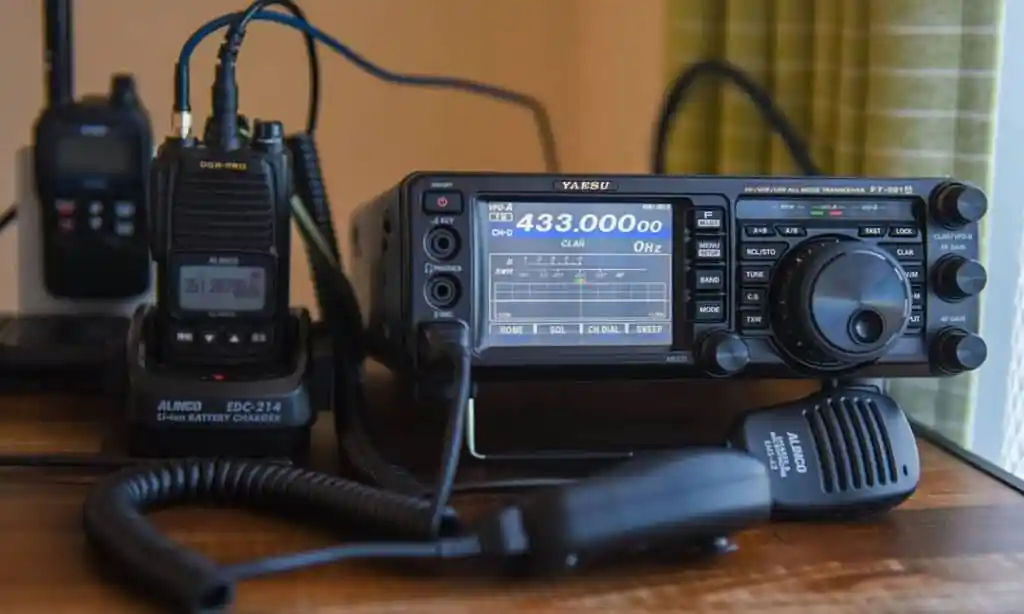
A two-way radio is a “transceiver,” meaning it can both send and receive. This distinguishes it from your car radio, which is a “receiver-only” device. In my professional experience, selecting the right type of two-way depends entirely on how much mobility versus power you need.
The industry categorizes these as:
- Handheld (Portables): Battery-powered units you carry on your hip.
- Mobiles: Units installed in vehicles or machinery.
- Base Stations: Fixed units that act as the “hub” for a dispatch center.
What Are Portable, Mobile, And Desktop Base Station Radios?
Understanding the form factor is crucial for your deployment strategy.
Portable Handhelds
These are built for mobility. Modern industrial portables are ruggedized to survive a 6-foot drop onto concrete. They usually operate at 5 watts of power.
- Best For: Individuals moving through a job site.
Mobile Radios
These are installed in vehicles and run off the vehicle’s battery. Because they aren’t limited by a small handheld battery, they can transmit at 25 to 50 watts.
- Best For: Logistics, ambulances, and delivery fleets.
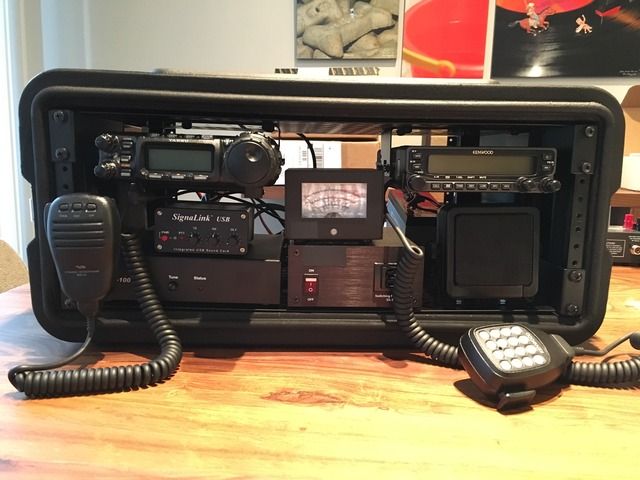
Desktop Base Stations
These are the powerhouses. They stay in a fixed location and are usually connected to a high-gain antenna mounted on the roof.
- Best For: Central dispatching and security offices.
What Are Professional And Industrial Two-Way Radios?
When you move from consumer grade to Professional/Industrial, you aren’t just paying for a brand name; you are paying for reliability and safety. Industrial radios use Digital Mobile Radio (DMR) or P25 standards, which provide crystal-clear audio even at the edge of the range.
Key Professional Features:
- IP Ratings: Many professional radios are IP67 rated, meaning they are dust-tight and waterproof.
- Intrinsically Safe (IS): In oil and gas or chemical plants, radios must be IS-rated so they don’t cause an explosion in volatile atmospheres.
- Man-Down Features: Many industrial radios have built-in accelerometers. If a worker falls and doesn’t move, the radio automatically sends an emergency distress signal.
What Are Marine And Aviation Radios?
These radios are strictly for safety in their respective environments. Marine Radios operate on the VHF band and are required for any vessel traveling in open water. Channel 16 is reserved globally for Distress and Calling.
Aviation Radios use the 108–137 MHz band. Interestingly, they still use AM modulation rather than FM. This is because AM allows for “simultaneous reception,” meaning if two pilots talk at once, you hear a “heterodyne” squeal rather than one pilot’s signal completely “blocking” the other. It’s a critical safety feature of the sky.
What Are The Key Differences Between Am And Fm Radio?
The battle between AM and FM is a trade-off between distance and quality.
AM (Amplitude Modulation)
- Pros: Can travel hundreds of miles by “skipping” off the ionosphere.
- Cons: Low audio quality; picks up interference from power lines and lightning.
FM (Frequency Modulation)
- Pros: Very high fidelity; immune to most electrical interference.
- Cons: Limited to “line-of-sight.” If a mountain is between you and the tower, you won’t hear anything.
How Do You Set Up A Two-Way Radio System?
Setting up a system requires more than just turning on the power. You must consider terrain, building materials, and interference.
- Site Survey: Walk your facility to find “dead spots” (usually elevators or basement levels).
- Antenna Placement: Height is everything. An extra 10 feet of height on your antenna can add miles of range.
- Repeater Installation: If your building is too large for radio-to-radio communication, a repeater receives the signal and “blasts” it out at a higher power.
What Are Radio Frequency Bands And How Do They Affect Performance?
The band you choose dictates how your signal interacts with the world.
- VHF (Very High Frequency): Better for outdoor use. The waves are longer and can “bend” over hills and around trees.
- UHF (Ultra High Frequency): Better for indoor use. The waves are shorter and can pass through window frames and doors more easily than VHF.
- HF (High Frequency): The “Shortwave” bands used for international communication.
What Facts And Figures Highlight The Importance Of Radios?
Despite the rise of smartphones, radio remains the most resilient communication medium. During major disasters like Hurricane Katrina or the 2023 wildfires, cellular networks often fail due to congestion or power loss.
SSA Data Point:
According to Authoritative source needed, 82% of emergency responders still rely on Land Mobile Radio as their primary “life-safety” voice tool. This statistic proves that in the moments that matter most, the simplicity and reliability of a dedicated radio frequency outperform the complexity of modern cellular networks.
Which Radio Is Right For You? (Quiz)
1. Where will you use it most?
- A. Indoors/City (Go to 2)
- B. Outdoors/Rural (Go to 3)
2. Is it for a large team or just family?
- Team: UHF Professional DMR
- Family: FRS (License Free)
3. Do you need a range over 5 miles?
- Yes: GMRS (Licensed) or Ham
- No: MURS (License Free)
Frequently Asked Questions About Types Of Radios
What Are The Types Of Radios Available For Personal And Professional Use?
For personal use, FRS and CB are the standard. For professional use, UHF/VHF digital radios (DMR) are preferred due to their encryption and durability. Amateur (Ham) radio is the best for hobbyists.
What Are The Different Types Of Two-Way Radios And How Do They Differ?
They are categorized as Portables (handheld), Mobiles (vehicle-mounted), and Base Stations (fixed). They differ in power output, antenna size, and their primary power source (battery vs. vehicle vs. AC).